
The Complete Guide to Spanish Cuisine: Regions, Dishes & Traditions
Updated: Jul 17
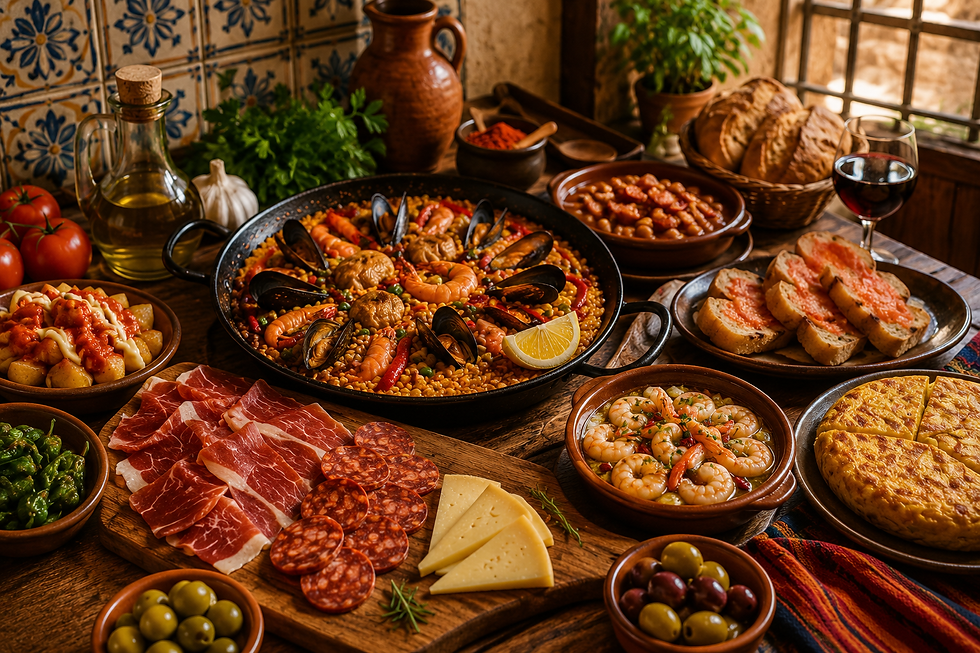
Have you ever wondered why Spanish food makes people close their eyes and smile? Spanish cuisine is one of the world's most diverse and delicious food cultures. From the Mediterranean coast to the Atlantic shores, Spain's kitchens tell stories of history, geography, and passion.
This guide takes you through every corner of Spanish food culture. You'll learn about regional specialties, famous dishes, traditional ingredients, and dining customs. You'll discover how geography shaped the food on your plate. Most importantly, you'll learn how to experience Spanish cuisine like a local.
Whether you're planning a food-focused trip to Spain or want to cook authentic Spanish food at home, this guide has everything you need.
What Is Spanish Cuisine?
Spanish cuisine is a diverse food culture shaped by Spain's geography, history, and traditions. It centers on fresh, seasonal ingredients like olive oil, garlic, tomatoes, and seafood. Spanish food values simple flavors and cooking methods that let ingredients shine.
Featured Snippet Answer: Spanish cuisine combines Mediterranean flavors with Atlantic influences. It's known for dishes like paella, tapas, and gazpacho. Spain's food culture emphasizes fresh ingredients, seasonal eating, sharing meals, and strong regional traditions. Each region has unique specialties that reflect local geography and history.
Why Spanish Cuisine Is So Diverse
Spain's food is diverse because of its geography, climate, and history.
Geography and Climate
Spain stretches from the Mediterranean Sea to the Atlantic Ocean. The northern coast has abundant seafood. The central plains grow wheat and raise livestock. The southern regions produce olives, oranges, and almonds.
The climate varies dramatically. The Mediterranean coast gets warm, sunny summers and mild winters. The northern coast is wetter and cooler. These differences mean each region grows different foods and developed different cooking styles.
Historical Influences
Spain's history shaped its food culture. The Moors ruled Spain for 800 years and brought new ingredients like saffron, cumin, and almonds. Jewish communities contributed their own cooking traditions. When Spain explored the Americas, traders brought tomatoes, peppers, and potatoes home.
Trade routes connecting Spain to the Mediterranean and Atlantic meant constant exchange of ingredients and ideas. Different kingdoms ruled different regions, creating separate food identities that survived for centuries.
Cultural Traditions
Spanish culture values family meals, celebration, and sharing. Meals are events, not just fuel. Food connects Spanish people to their history, their land, and each other.
The Main Culinary Regions of Spain
Spanish cuisine isn't one thing—it's eleven different things. Each region has its own identity, ingredients, and signature dishes.
Catalonia
Catalonia sits on Spain's northeastern coast near Barcelona. This region is wealthy and creative, and that shows in its food.
Signature Dishes
Catalan food mixes seafood with mountain ingredients. You'll find escalivada (grilled vegetables), calcots (roasted spring onions), and fideuà (noodle dish similar to paella). Pan con tomate (bread with tomato and olive oil) is a Catalan staple. Crema Catalana is the region's famous dessert—it's like crème brûlée but with cinnamon.
Cooking Style
Catalan cooking is experimental. Chefs here aren't afraid to mix traditional and modern. The region produces great restaurants and also honors old recipes. Seafood is central because the Mediterranean is right there.
Ingredients
Catalonia uses saffron, almonds, pine nuts, and seafood. Tomatoes, peppers, and garlic are constant. Olive oil from inland areas and seafood from the coast come together in many dishes.
Local Specialties
Botifarra is a fresh sausage made from pork. Calcots are special spring onions that taste sweet when roasted. During calcot season (February-March), festivals celebrate this ingredient. Suquet de peix is a fisherman's stew with white fish, potatoes, and a special sauce.
Dining Traditions
Barcelona has vibrant tapas culture. You'll stand at bars and eat small plates while drinking vermouth or beer. Dinner happens late—around 9 or 10 PM.
Valencia
Valencia is on Spain's eastern coast where the Mediterranean meets agricultural plains. This region is the rice capital of Spain.
Signature Dishes
Valencia gave the world paella. This one-pan rice dish cooked with seafood, meat, or vegetables is the most famous Spanish dish. But paella is just one thing Valencia does well.
Discover what paella is and why it matters to Valencian culture. Learn about the region that created paella and its traditions.
Esgarraet is a salad of salt cod, orange, and olive oil. It's simple and refreshing. All i pebre is an eel stew made with paprika and garlic. Arroz a banda is rice cooked in fish broth, served with seafood on the side.
Cooking Style
Valencian cooking is straightforward and lets ingredients speak. Rice dishes are cooked over open flames, creating a crispy bottom layer called socarrat. This is intentional, not burned—it's the best part.
Ingredients
Bomba rice is the traditional rice for paella. Learn why the best rice for paella comes from Valencia. You'll also find saffron (the spice that makes rice golden), tomatoes, green beans, beans, paprika, and seafood.
Local Specialties
Water, fire, and rice are the trinity of Valencian cooking. Horchata with fartons (sweet pastries) is a Valencia tradition. People drink this cold, sweet beverage as a snack or dessert.
Dining Traditions
Lunch is the main meal in Valencia. Many Valencians have a light breakfast, a big lunch around 2 PM, and a light dinner. Paella is eaten at lunch, often with family or friends gathered around one big pan.
Andalusia
Andalusia covers Spain's sunny southern coast. This region has Moorish influences, fresh seafood, and intense sunshine.
Signature Dishes
Gazpacho is a cold tomato soup perfect for hot days. It's refreshing, simple, and only needs tomatoes, bread, garlic, olive oil, and vinegar. Salmorejo is a thicker version with jamón Ibérico and egg. Espetos are fresh fish grilled on the beach over open fire. Rabo de toro is a warm soup with oxtail and vegetables.
Boquerones en vinagre (anchovies in vinegar) are a simple, bright tapa. Fritura malagueña is fried fish—small fish like sardines and anchovies, fried until crispy. Espinacas con garbanzos (spinach with chickpeas) is a vegetable dish with Moorish roots.
Cooking Style
Andalusian cooking is influenced by Moorish traditions. It uses almonds, dried fruit, and spices. Frying is common, especially for fish. The culture celebrates simple, honest food.
Ingredients
Gazpacho, gazpacho, gazpacho. But also almonds, sherry, seafood, citrus, and dried fruit. Paprika comes from Pimentón de la Vera, a smoked paprika from nearby. Olive oil is liquid gold here.
Local Specialties
Jamón Ibérico is cured pork from black Iberian pigs. This ham is salty, rich, and tender. It's expensive because the pigs eat acorns and the curing takes years. In Andalusia, you'll find the best jamón and the best prices. Espetos (grilled fish on the beach) are a summer tradition. Rabo de toro is oxen tail soup, hearty and warming.
Dining Traditions
Andalusians eat late and celebrate life. Dinner might be 9 or 10 PM. Vermouth is popular before dinner. Flamenco music often accompanies meals. People gather for hours, talking and eating.
Basque Country
The Basque Country sits in Spain's far north, squeezed between Spain and France on the Atlantic coast. Basque people have their own language and strong food identity.
Signature Dishes
Marmitako is a fish and potato stew made with tuna. Txuleta is a grilled ribeye steak, cooked simply with salt and grilled on a wood fire. Bacalao a la Vizcaína is salt cod in a red pepper sauce—it's complex and delicious. Pintxos are small bites on bread, usually topped with seafood, meat, or vegetables. San Sebastián is the pintxo capital of Spain.
Cooking Style
Basque cooking values technique and precision. They grill over wood fires. They make rich sauces from scratch. The food is hearty and flavorful. Basque chefs are serious about their craft.
Ingredients
Seafood dominates. Anchovies, cod, tuna, and hake are essential. Peppers (especially piquillo peppers), tomatoes, onions, and garlic are constant. Cider is made here and used in cooking.
Local Specialties
Piquillo peppers are small, sweet peppers with a point. They're roasted over fire, which gives them a smoky flavor. They're often stuffed with cheese or fish. Txakoli is a slightly fizzy white wine from the Basque Country. It's served cold and pairs well with seafood.
Dining Traditions
Txoko are private gastronomic societies where Basque men gather to cook together. These clubs are central to Basque food culture. Food here is taken seriously. San Sebastián has more Michelin stars per capita than anywhere else in the world.
Galicia
Galicia is in Spain's far northwest, on the Atlantic coast. It's green, wet, and famous for seafood.
Signature Dishes
Pulpo a la Gallega is octopus boiled until tender, cut into pieces, and served with paprika and olive oil. It's simple, elegant, and delicious. Caldo Gallego is a vegetable and meat soup. Empanada Gallega is a filled pastry with meat or seafood. Percebes (goose barnacles) are expensive, rare seafood that looks alien but tastes briny and sweet.
Cooking Style
Galician cooking celebrates seafood. It uses minimal techniques—grilling, boiling, frying. Let the ingredient quality shine.
Ingredients
Seafood is everything here. Hake, scallops, mussels, clams, octopus. Turnip greens, beans, corn. Paprika (pimentón) is used heavily. Cheese from the region is creamy and rich.
Local Specialties
Ría is a type of coastal inlet, and Galicia has many. Each ría produces different seafood. Ría de Arousa produces mussels. Ría de Vigo produces scallops. The seafood is fresh because these ingredients still swim in local waters.
Dining Traditions
In Galicia, eating seafood is a pilgrimage. People travel to small beach towns to eat percebes or pulpo at simple restaurants. Wine is Albariño, a crisp white wine that goes with seafood perfectly.
Madrid
Madrid is Spain's inland capital. What the city eats reflects its position as the center of Spain's trading network.
Signature Dishes
Cocido Madrileño is a boiled dinner of chickpeas, meat, and vegetables. It's comfort food, hearty and warming. Rabo de toro is oxtail soup. Callos a la Madrileña is tripe stewed in red sauce. Sopa de ajo (garlic soup) is simple—just bread, garlic, egg, and paprika in broth.
Cooking Style
Madrid food is traditional and hearty. It comes from peasant traditions and home cooking. The food is filling and designed to warm you on cold days.
Ingredients
Chickpeas, beans, meat (especially pork and beef), dried peppers, garlic, olive oil. Not much fresh seafood because Madrid is landlocked.
Local Specialties
Jamón from the surrounding areas. Chorizo (spiced pork sausage). Morcilla (blood sausage). These cured meats are fundamental to Madrid's food culture.
Dining Traditions
Madrid's tapas culture is energetic. People move from bar to bar, drinking vermouth, wine, or beer, and eating small plates. Lunch is still the main meal, usually 2-4 PM. Dinner is light and late.
Asturias
Asturias is in Spain's far northwest on the Atlantic coast. It's mountainous, green, and known for hearty mountain food.
Signature Dishes
Fabada Asturiana is a bean stew with pork—chorizo, morcilla, and pork shoulder. It's rich, warming, and completely addictive. Cabraales is blue cheese from the mountains. Empanada Asturiana is a filled pastry. Cachopo is a breaded and fried veal cutlet stuffed with jamón and cheese.
Cooking Style
Asturian cooking is rustic mountain food. It's hearty, warming, and unapologetic about pork and cream. No pretense. Just delicious comfort food.
Ingredients
Pork products. Beans. Mountain cheese. Cider (Asturias makes cider, not wine). Chorizo and morcilla.
Local Specialties
Cabrales cheese is made from cow, goat, and sheep milk mixed together and aged in caves. It's blue, strong, and amazing. Fabada Asturiana is the regional pride. Cachopo is a dish that shouldn't work (fried veal stuffed with pork and cheese) but tastes incredible.
Dining Traditions
Cider is poured from height (escanciador) to aerate it, then drunk quickly. Meals are long, relaxed, and centered around good food and company.
Castilla-La Mancha
Castilla-La Mancha is central Spain's inland plateau. It's hot, dry, and historically poor. But this region has strong food traditions.
Signature Dishes
Pisto is a vegetable stew, like ratatouille. Migas is fried bread with paprika, garlic, and pork. It's peasant food that's deeply satisfying. Queso de la Mancha is the region's famous cheese. Gazpacho originates here too.
Cooking Style
Castilian food is rustic and honest. Bread is important. Pork is important. Simple techniques produce big flavors.
Ingredients
Bread, paprika, garlic, pork products, vegetables, wheat, cheese.
Local Specialties
Queso de la Mancha is white cheese made from sheep milk. Don Quixote, Spain's most famous literary character, was from here. Manchego cheese is exported worldwide and considered excellent.
Dining Traditions
Food is simple and centered around what the land produces. Wine from the region is improving and becoming respected.
La Rioja
La Rioja is Spain's wine region. It's small but mighty in terms of reputation.
Signature Dishes
Piquillo peppers stuffed with cheese or meat. Espárragos de Calahorra (white asparagus). Chorizo is made here and exported worldwide.
Cooking Style
La Rioja food is influenced by Basque and Castilian traditions. Wine is central to cooking here.
Ingredients
Peppers, asparagus, pork for chorizo, wine.
Local Specialties
Rioja wine is red wine made from Tempranillo grapes. It's aged in oak and tastes complex and smooth. Wine tourism is huge here.
Dining Traditions
Food and wine pairing is taken seriously. Meals are built around wine.
Balearic Islands
The Balearic Islands are off Spain's eastern coast. These islands have their own food culture shaped by Mediterranean geography and tourism.
Signature Dishes
Pa amb tomàquet (bread with tomato), similar to Catalan pan con tomate. Tumbet is a vegetable dish. Seafood stews and grilled fish dominate.
Cooking Style
Island cooking uses seafood heavily and Mediterranean ingredients.
Ingredients
Seafood, tomatoes, peppers, garlic, olive oil, almonds.
Local Specialties
Sobrasada is a soft, spreadable sausage made with paprika. It's creamy and delicious on toast.
Dining Traditions
Beach dining is central. Fresh fish grilled simply is common. Tourism influences the food, but traditional recipes survive in family restaurants.
Canary Islands
The Canary Islands are off Spain's southern coast near Africa. They're tropical, and their food shows it.
Signature Dishes
Mojo sauce (red or green) is made with peppers, garlic, and oil. Everything gets mojo. Papas arrugadas are small potatoes boiled in salt water until wrinkled. Gofio is roasted grain flour used in many dishes.
Cooking Style
Canary food is simple and influenced by African flavors. Spicing is more adventurous than mainland Spain.
Ingredients
Potatoes, seafood, peppers, tropical fruit, legumes.
Local Specialties
Mojo verde and mojo rojo (green and red spiced sauces) are used for everything. Papas arrugadas with mojo is a national treasure.
Dining Traditions
Casual, informal eating. Fresh fish grilled on the beach. Tropical fruit is celebrated.
The Most Famous Spanish Dishes
These are the dishes that define Spanish cuisine. If you come to Spain, you'll eat these.
Dish | Region | Main Ingredients | Best Time to Eat | Why Try It |
Paella | Valencia | Bomba rice, saffron, seafood or meat, tomatoes | Lunch | The most iconic Spanish dish |
Gazpacho | Andalusia | Tomatoes, bread, garlic, olive oil, vinegar | Summer lunch | Refreshing cold soup on hot days |
Tapas | All regions | Various | Evening or anytime | Small plates to share |
Jamón Ibérico | Andalusia/Extremadura | Iberian pork, salt, time | Anytime | Expensive, complex, worth it |
Tortilla Española | All regions | Eggs, potatoes, onions, olive oil | Anytime | Spanish omelette, perfect anywhere |
Patatas Bravas | Catalonia | Potatoes, spicy mayo, paprika | Tapas | Crispy potatoes with sauce |
Fabada Asturiana | Asturias | Beans, pork, chorizo, morcilla | Winter lunch | Hearty bean stew |
Pulpo a la Gallega | Galicia | Octopus, paprika, olive oil, potatoes | Dinner | Tender octopus simply prepared |
Croquetas | All regions | Béchamel, ham or seafood, breading | Tapas | Creamy, crunchy, addictive |
Crema Catalana | Catalonia | Egg yolks, milk, sugar, cinnamon | Dinner/dessert | Catalan crème brûlée |
Bacalao a la Vizcaína | Basque Country | Salt cod, red peppers, onions | Dinner | Complex pepper sauce |
Pimientos de Padrón | Galicia | Small green peppers, salt, olive oil | Tapas | Some are spicy, most are mild |
Traditional Spanish Ingredients
Spanish cuisine relies on core ingredients. These flavors repeat across regions with local variations.
Olive Oil
Olive oil is not an ingredient in Spanish cooking—it's the foundation. Spain produces more olive oil than any other country. Spanish oil ranges from grassy and green to fruity and rich.
Different regions produce different styles. Andalusian oil tends to be smoother. Northern Spanish oils can be grassy and peppery. Use good olive oil. It makes a difference.
Rice
Rice came to Spain through Moorish traders. It thrives in the wetlands around Valencia. Bomba rice is the variety for paella—it absorbs liquid without getting mushy. Learn about rice selection and cooking techniques to make restaurant-quality paella at home.
Seafood
Spain has thousands of miles of coastline. Seafood is eaten fresh and preserved. Canned seafood (called conservas) is eaten regularly and considered luxury. Anchovies, mussels, clams, octopus, squid, cod, hake, tuna, and scallops all appear in Spanish cuisine.
Pork
Spanish pork products are world-class. Jamón Ibérico (cured ham) is the king. Chorizo (spiced sausage) is eaten everywhere. Morcilla (blood sausage) is essential in Madrid and Asturias. Sobrasada (soft sausage) comes from the Balearics.
Cheese
Spain makes excellent cheese. Manchego from La Mancha is firm and nutty. Cabrales from Asturias is blue and strong. Tetilla from Galicia is creamy. Queso de Burgos is soft and mild.
Saffron
Saffron gives paella its golden color and unique flavor. It's expensive because thousands of tiny stigmas must be hand-harvested from crocus flowers. Understand saffron's role in paella making and why this spice costs so much.
Paprika
Paprika (pimentón) comes in sweet, hot, or smoked varieties. Pimentón de la Vera is smoked paprika from a specific region. It gives food a smoky depth.
Garlic
Garlic is fundamental. Spanish cooking uses garlic constantly. Sometimes whole cloves go into hot oil. Sometimes garlic is minced fine. Either way, it's essential.
Tomatoes
Fresh tomatoes in summer. Canned tomatoes year-round. Tomato sauce (sofrito) is the base of many dishes.
Legumes
Beans, chickpeas, and lentils appear constantly. Fabada Asturiana uses beans. Cocido Madrileño uses chickpeas. They're filling, nutritious, and tied to Spanish food traditions.
Fresh Herbs
Parsley, cilantro, and other herbs add brightness. They're used at the end of cooking to keep their flavor fresh.
Spanish Meal Times and Dining Traditions
Spain eats differently than most countries. Understanding Spanish meal structure helps you navigate restaurants and experience food like locals.
Breakfast (Desayuno)
Spanish breakfast is light. A café con leche (coffee with hot milk) and a pastry or toast. Some people have churros dipped in hot chocolate. Breakfast is quick, usually just an hour after waking.
Mid-Morning (Almuerzo)
Around 11 AM, people grab a quick snack. A sandwich, pastry, or tapa with a drink. This keeps people going until lunch.
Lunch (Comida)
Lunch is the main meal, usually 2-4 PM. People go home to eat or go to restaurants. Lunch has multiple courses: first course (salad or soup), second course (protein), and dessert. A drink accompanies the meal. Lunch lasts 1-2 hours.
Afternoon (Merienda)
Around 6 PM, people have a light snack. Children get milk and pastry. Adults might have a coffee and small bites.
Dinner (Cena)
Dinner is 9-10 PM and lighter than lunch. Soup, salad, or small plates. Sometimes just tapas and wine. Dinner can stretch all evening.
Tapas Culture
Tapas are small bites—a few olives, some cheese, a croqueta, some jamón. Traditionally, tapas were free with drinks. Now you order them.
Going "de tapas" means moving from bar to bar, eating small plates, and drinking. It's social. It's how Spanish people enjoy food and each other.
Sharing Food
Spanish meals are communal. Even at restaurants, plates come in the center and people share. Bread is always on the table. Wine or beer is poured for everyone.
Restaurant Customs
In Spanish restaurants, staff don't rush. A meal takes time. You'll get bread while deciding. Butter is rare (use olive oil). Water isn't automatic (ask "agua" if you want it).
Asking for the bill is direct: "la cuenta, por favor." Tipping is 5-10% if service is exceptional. It's not expected.
Spanish Food Festivals and Seasonal Traditions
Spain celebrates food through the year. Food festivals are windows into regional food culture.
Spring
Calcots (roasted spring onions) arrive in February-March. Catalonia celebrates with calcot festivals. People grill the onions and eat them with romesco sauce.
Asparagus season. La Rioja celebrates white asparagus. It's tender, sweet, and expensive.
Summer
Beach restaurants grill fresh fish. Gazpacho season starts. Markets overflow with tomatoes, peppers, and stone fruit.
Fall
Mushroom season in northern regions. Forests produce wild mushrooms that appear in markets and on restaurant menus.
Wine harvest. La Rioja and other wine regions celebrate the new vintage.
Winter
Jamón Ibérico is prized. Truffle season in some regions.
Oranges are fresh and cheap in the south.
Christmas brings special foods. Turrón (nougat) is eaten. Roscón de Reyes (Three Kings cake) marks January 6.
Spanish Drinks to Try
Spanish drinks are central to the food experience.
Wine
Spain produces amazing wine. Rioja is smooth and complex. Ribera del Duero is bold and rich. Albariño from Galicia is crisp and pairs with seafood. Sherry from Andalusia is complex and special.
Spanish wine is reasonably priced. A good bottle costs 8-15 euros. Wine is drunk with meals and during tapas.
Cava
Cava is Spanish sparkling wine, similar to Champagne but cheaper. It's festive and light. Drink it as an aperitif or with dessert.
Sherry
Sherry is fortified wine from Andalusia. It's complex, ranging from dry (fino) to sweet (pedro ximénez). Sherry is sipped slowly before or after dinner.
Vermouth
Vermouth is fortified wine infused with herbs. Spanish vermouth is served chilled with ice and olive. It's before-dinner drink culture.
Horchata
Horchata is a sweet drink made from tiger nuts (not actual nuts). It's creamy, cool, and refreshing. In summer, people drink it as a snack with fartons (sweet pastry).
Sangria
Sangria is wine mixed with fruit, juice, and sugar. Every bar makes it differently. It's refreshing but sweet.
Sidra
Cider from Asturias and Galicia is cloudy and relatively low alcohol. It's poured from height to aerate it. It's drunk quickly.
Where to Eat Authentic Spanish Food
Finding authentic Spanish food means going where locals go.
Markets (Mercados)
Spanish food markets are beautiful and overwhelming. Walk through slowly. Watch what locals buy. Ask vendors for advice.
In Barcelona, La Boqueria is famous but touristy. Smaller neighborhood markets are better for authentic experience.
Markets open early (7-8 AM) and close around 2 PM. Go early for best selection.
Family-Run Restaurants
Small restaurants run by families are where authentic food lives. They cook traditional recipes using local ingredients. Menus change with seasons and what's available. Prices are fair.
Look for restaurants that are busy with locals. That's your sign.
Regional Specialties
Each region has restaurants known for specific dishes. In Valencia, seek out restaurants that specialize in paella. In San Sebastián, look for pintxo bars. In Andalusia, find gazpacherías.
Food Tours
Guided food tours in major cities teach you about regional food, take you to real restaurants, and connect you with local guides who know their food.
Cooking Classes
Taking a cooking class teaches you technique and kitchen culture. You'll work with a chef, learn traditional recipes, and eat what you make.
Barcelona has many paella cooking classes. Learn the difference between various paella cooking experiences in Barcelona and Madrid and find classes near Las Ramblas if you're visiting the city.
Common Myths About Spanish Cuisine
Spanish food has myths. Here's what's actually true.
Myth | Reality |
Spanish food is all spicy | Most Spanish food is mild. Spice is rare except in Canary Islands. |
Paella is eaten every day | Paella is special occasion food, usually eaten at lunch on weekends. |
Spanish food is complicated | Spanish cooking is often simple—good ingredients, basic technique. |
Sangria is traditional | Sangria is modern and aimed at tourists. Locals drink wine or beer. |
Churros are breakfast | Churros are dessert or late-night snack. Breakfast is coffee and a pastry. |
Spanish food is unhealthy | Spanish diet is Mediterranean diet, one of the world's healthiest. |
All Spanish food is Mediterranean | Central Spain inland has different food culture than coast. |
Spanish food is always meat-heavy | Vegetable, bean, and seafood dishes are equally important. |
Essential Spanish Dishes Every Visitor Should Try
Paella – Order it at lunch in Valencia or a seafood restaurant anywhere. This is the most famous Spanish dish for good reason.
Gazpacho – Summer lunch in Andalusia. It's refreshing, simple, and tastes like tomato perfection.
Jamón Ibérico – Expensive but worth it. This cured ham is complex, tender, and tastes nothing like most ham.
Tapas – Go to a tapas bar and order several small plates. The experience—hopping bars, talking, sharing—is as important as the food.
Tortilla Española – This Spanish omelette appears everywhere and is always comforting.
Pulpo a la Gallega – Tender octopus with paprika. It looks scary but tastes incredible.
Croquetas – Creamy on the inside, crispy outside. Jamón, seafood, or cheese varieties.
Fabada Asturiana – Hearty bean stew with pork. Comfort food at its best.
Pimientos de Padrón – Small peppers that are mostly mild with occasional spicy surprises.
Crema Catalana – The Catalan dessert with a crispy sugar crust and creamy filling.
Spanish Cuisine vs Other Mediterranean Cuisines
Mediterranean cuisine includes Spanish, Italian, Greek, and Turkish food. These cuisines share similarities but have differences.
Factor | Spanish | Italian | Greek | Turkish |
Protein Main | Seafood, pork | Pasta, seafood | Seafood, lamb | Lamb, seafood |
Staple Grain | Rice | Pasta | Wheat | Wheat |
Signature Oil | Olive oil | Olive oil | Olive oil | Olive oil |
Cooking Method | Grilling, frying | Boiling, baking | Grilling | Grilling |
Key Spice | Paprika, saffron | Basil, oregano | Oregano | Cumin |
Famous Dish | Paella | Pasta | Moussaka | Kebab |
Flavor Profile | Mild, savory | Herbal, fresh | Herbal, lemony | Spiced, bold |
Meal Culture | Long, social | Long, social | Long, social | Long, social |
All Mediterranean cuisines value olive oil, fresh ingredients, and time at the table. Spanish food emphasizes regional variation and seafood more than some others.
How to Experience Spanish Cuisine Like a Local
Plan Around Meal Times
Eat when Spanish people eat. Breakfast is 8-9 AM. Lunch is 2-4 PM. Dinner is 9-11 PM. Restaurants that are packed at these times are good. Empty restaurants mean tourist trap.
Eat Where Locals Eat
Ignore restaurants obviously aimed at tourists. Look for places with Spanish menus (not English translations with pictures). If you can't read the menu, that's often a good sign.
Markets filled with locals buying ingredients. Neighborhood bars packed during lunch. Small family restaurants in residential areas. These are where real Spanish food happens.
Order Seasonal
Ask what's seasonal. A smart waiter will tell you. In summer, get gazpacho. In spring, get asparagus. The seasonal specials are often the best value and best quality.
Share Plates
Order multiple plates and share. This teaches you variety and is how Spanish people eat.
Slow Down
Spanish meals take time. You'll have courses. There's talking between courses. Staff won't rush you. This is normal. Sit back and enjoy the pace.
Try the Local Wine
Don't order wines you know. Ask for local wine recommendations. Spanish wine is excellent and cheap.
Don't Skip Dessert
Spanish desserts aren't as elaborate as French but are delicious. Flan, crema Catalana, turrón, churros—these are worth trying.
Use Spanish Phrases
Learning basic food Spanish helps. "Delicioso" (delicious). "Un poco de pan, por favor" (a little bread, please). "Quería probar algo típico" (I'd like to try something typical). Spanish people appreciate the effort.
Take Your Time Between Courses
There's no rush. Water, wine, and conversation happen between dishes. Staff clears your plate and brings water. Then comes the next course. This is a meal, not a transaction.
Talk to Servers
Tell them you want authentic food. Ask what they recommend. Mention you want to try local specialties. Passionate servers will steer you right.
Regional Cuisine Comparison Table
Region | Location | Main Protein | Signature Ingredient | Famous Dish | Flavor Profile | Best Time to Visit |
Catalonia | Northeast coast | Seafood | Saffron | Fideuà | Bold, complex | Year-round |
Valencia | East coast | Seafood | Bomba rice | Paella | Balanced, mild | Spring-Fall |
Andalusia | South coast | Seafood, pork | Paprika | Gazpacho | Spiced, fresh | Summer |
Basque Country | North coast | Seafood | Piquillo pepper | Marmitako | Technique-focused | Year-round |
Galicia | Northwest coast | Seafood | Paprika | Pulpo a la Gallega | Ocean-fresh | Summer-Fall |
Madrid | Central | Pork, meat | Chickpea | Cocido Madrileño | Hearty, warming | Winter |
Asturias | North | Pork | Bean | Fabada Asturiana | Rich, rustic | Winter |
Castilla-La Mancha | Central plateau | Pork | Paprika | Migas | Rustic, simple | Winter |
La Rioja | North-central | Pork, wine | Piquillo pepper | Rioja wine | Wine-forward | Year-round |
Balearic Islands | Off east coast | Seafood | Paprika | Tumbet | Mediterranean | Summer |
Canary Islands | Off south coast | Seafood | Paprika | Papas arrugadas | African-influenced | Year-round |
Spanish Cheeses to Know
Spain makes more cheese than you probably realize.
Manchego – From La Mancha. Firm, nutty, aged in wheels. The most exported Spanish cheese.
Cabrales – From Asturias. Blue cheese. Strong, creamy, intense. Not for cheese beginners.
Tetilla – From Galicia. Soft, creamy, mild. Looks like a breast (hence the name). Delicate flavor.
Queso de Burgos – Fresh cheese from Burgos. Soft, mild, slightly sweet. Eaten young.
Idiazabal – From Basque Country. Hard, smoked, nutty. Complex flavor.
Mahón – From Balearic Islands. Hard, pale yellow, creamy. Aged versions are best.
Spanish cheese is excellent value. Try them at markets or specialized cheese shops.
Spanish Cooking Methods
Grilling (Parrilla)
Over wood or charcoal. Fish, meat, vegetables, cheese get grilled simply.
Frying (Fritura)
Spanish frying produces crispy outsides and tender insides. For fish, croquetas, patatas bravas.
Stewing (Guiso)
Slow-cooked dishes like fabada or cocido. Flavors meld over time.
Boiling (Cocción)
For paella, for soups, for cooking beans and rice.
Roasting (Horno)
Spanish kitchens use ovens less than some cuisines, but roasting happens. Vegetables roasted in olive oil.
Grilling Over Open Fire (Espetos)
Beach culture in the south. Fresh fish grilled over driftwood.
Understanding Spanish Ingredients Better
Pan con Tomate
This simple dish teaches you about Spanish ingredient quality. Good bread rubbed with a ripe tomato half, drizzled with olive oil, sprinkled with salt. That's it. The tomato, oil, and bread quality are everything.
Sofrito
This is the base of many Spanish dishes. Slow-cooked onion, garlic, and tomato in olive oil. It's how Spanish cooking starts.
Romesco
A sauce from Catalonia made with red peppers, tomatoes, garlic, vinegar, and nuts. Served with grilled vegetables or seafood.
Mojo
Spanish sauce from Canary Islands. Red mojo has peppers and garlic. Green mojo adds cilantro. Everything tastes better with mojo.
Spanish Food and Health
Spanish diet is the Mediterranean diet, considered one of the world's healthiest. It emphasizes:
Olive oil (healthy fats)
Seafood (omega-3 fatty acids)
Vegetables and beans (fiber, nutrients)
Whole grains
Moderate dairy (cheese, yogurt)
Limited red meat
Social eating (stress reduction)
Wine in moderation
Spanish people live longer with fewer diet-related diseases than most developed countries. This is connected to their food culture, not just what they eat.
Featured Snippet Answers
What is Spanish cuisine? Spanish cuisine is a diverse Mediterranean food culture centered on fresh, seasonal ingredients like olive oil, seafood, and regional specialties. It varies dramatically by region, from seafood-focused coastal areas to hearty mountain food. Spanish dining emphasizes shared meals, simple cooking techniques, and letting ingredient quality shine.
What food is Spain famous for? Spain is famous for paella (rice dish with seafood or meat), tapas (small shared plates), gazpacho (cold tomato soup), jamón Ibérico (cured ham), and seafood dishes. Each region has its own signature foods—Andalusia's gazpacho, Galicia's octopus, Asturias' bean stew, and Barcelona's pintxos.
What are the main regions of Spanish cuisine? Spain's eleven main culinary regions are Catalonia, Valencia, Andalusia, Basque Country, Galicia, Madrid, Asturias, Castilla-La Mancha, La Rioja, Balearic Islands, and Canary Islands. Each region has distinct specialties based on geography, climate, and local ingredients.
What is the national dish of Spain? Spain doesn't have one official national dish, but paella from Valencia is most iconic internationally. However, gazpacho from Andalusia, tapas culture nationwide, and cocido Madrileño from Madrid are equally important culturally.
What should tourists eat in Spain? Tourists should try paella, gazpacho, jamón Ibérico, tapas, tortilla española, pulpo a la Gallega, croquetas, and local seafood. The most authentic experience comes from eating what each region specializes in rather than seeking famous dishes everywhere.
Conclusion
Spanish cuisine is one of the world's most rewarding food cultures. Every region tells a different story through food. Every meal is a chance to understand Spain better.
The best way to learn Spanish food is to eat it. Sit in Spanish restaurants. Go to markets. Take cooking classes. Talk to people about food. Try dishes that scare you.
Spanish people are passionate about their food. They'll be excited that you're interested. They'll steer you right.
The complete guide to Spanish cuisine is really a guide to Spanish life. Food, family, friends, and time at the table are what Spain is about. When you understand Spanish cuisine, you understand Spain.


Comments