
Catalan Cuisine vs Spanish Cuisine: Key Differences Explained

Spain feeds the world stories about paella, tapas, and sangria. But ask someone from Barcelona if that food is “Spanish,” and you might get a firm correction. Catalan cuisine and Spanish cuisine share a border, not a menu.
Travelers mix them up constantly, ordering the wrong dish or missing regional specialties entirely. This guide breaks down Catalan cuisine vs Spanish cuisine so you know exactly what separates them. By the end, you’ll order with confidence and understand why Catalonia guards its food culture so closely.
What Is Spanish Cuisine?
Spanish cuisine is not one cuisine. It’s a collection of regional food traditions bound together by a shared country and language.
Spain has 17 autonomous communities. Each region cooks with local ingredients, climate, and history in mind. A dish from Galicia looks nothing like a dish from Andalusia.
Picture Spain as one large family. Everyone shares a surname, but each household cooks Sunday dinner differently. That’s an honest way to view Spanish food. A cookbook labeled “Spanish recipes” usually pulls from a dozen regions at once, blending Basque pintxos with Andalusian gazpacho and Catalan sauces as if they came from one kitchen. They didn’t.
When people say “Spanish cuisine,” they usually mean:
Tapas culture, small plates shared at bars
Olive oil as the primary fat
Garlic, tomatoes, and peppers as core flavors
Cured meats like jamón ibérico
Rice dishes, especially paella from Valencia
Wine and sherry as meal staples
Spanish cuisine also carries deep Moorish, Roman, and Jewish influences from centuries of conquest and trade. Saffron, almonds, and citrus arrived through these historical layers.
Restaurants outside Spain often flatten these differences into one generic menu. That approach loses the point. Each region protects its own culinary identity, and Catalonia is one of the loudest voices in that conversation. For more on Spain’s national culinary identity, visit Spain’s official tourism board.
For a broader breakdown of regional dishes and cooking styles, check this
What Is Catalan Cuisine?
Catalan cuisine comes from Catalonia, a region in northeastern Spain with Barcelona as its capital. Catalonia has its own language, flag, and food identity.
Catalan cooking sits at a crossroads. It borrows from:
Mediterranean coastal traditions: seafood, olive oil, fresh vegetables
Mountain and inland farming: legumes, pork, wild mushrooms
French culinary influence from the nearby border
The result is a cuisine built on contrast. Coastal towns serve fresh anchovies and grilled fish. Inland villages serve slow-cooked stews and cured sausages.
Ask a chef in Barcelona to describe Catalan food in one word, and you’ll likely hear “balance.” Catalan cooking rarely leans on a single dominant spice the way some Spanish regional dishes do. Instead, it builds flavor in layers, starting with a slow base, adding a protein, and finishing with a sauce that ties everything together. This layered approach is one of the biggest markers separating Catalan cuisine vs Spanish cuisine as a whole.
Catalan food philosophy centers on a concept called “mar i muntanya,” meaning “sea and mountain.” Dishes combine seafood and meat on the same plate, something rarely seen in other Spanish regions.
Catalonia also holds strong opinions about rice. Many Catalans argue paella is a Valencian dish, not a Catalan one, and that Catalonia has its own rice traditions, like arròs negre, black rice cooked with squid ink.
If you’re curious about where paella actually originated, this breakdown on which region paella comes from settles the debate with historical detail.
Catalan Cuisine vs Spanish Cuisine: Origins and History
Food history in Spain follows waves of conquest, trade, and geography.
Spanish cuisine as a whole absorbed:
Roman farming techniques: olives, wheat, wine
Moorish spices and techniques: saffron, rice cultivation, frying
New World ingredients after 1492: tomatoes, peppers, potatoes, chocolate
These layers built a national food identity around bold, communal eating. Tapas culture grew from this shared, layered history.
Catalan cuisine developed along its own historical path. Catalonia traded heavily with Italy and southern France during the medieval period. This connection shaped Catalan cooking toward:
Sauces built on nuts and bread, like romesco
Early use of chocolate in savory dishes
Techniques closer to French and Italian cooking than the rest of Spain
Catalonia also produced one of Europe’s oldest cookbooks, the Llibre de Sent Soví, written in the 14th century. This text proves Catalan cuisine had a documented identity centuries before modern Spain existed as a unified nation.
That history matters today. Catalans see their food as older and distinct, not a regional variation of something bigger.
Consider the timeline side by side. Spain as a unified political entity didn’t take shape until the late 15th century, when the crowns of Castile and Aragon merged. Catalonia, meanwhile, had already spent hundreds of years building trade networks across the Mediterranean, exchanging goods and cooking ideas with Genoa, Naples, and southern France. Recipes traveled along those same trade routes. That’s why you’ll spot techniques in Catalan kitchens, like using nuts to thicken a sauce, that show up in Italian and French cooking but rarely elsewhere in Spain.
This timeline explains a lot about why Catalans push back when someone calls their food simply “Spanish.” The cuisine predates the country in its current form.
Catalan Cuisine vs Spanish Cuisine: Key Ingredients
Ingredients tell the clearest story. Here’s a side-by-side comparison.
Category | Spanish Cuisine (General) | Catalan Cuisine |
Primary fat | Olive oil | Olive oil, with butter used near the French border |
Signature sauce | Alioli: garlic and oil | Romesco: nuts, tomato, roasted peppers |
Seafood style | Fried fish, pescaíto frito | Grilled and stewed fish, suquet de peix |
Rice dishes | Paella Valenciana | Arròs negre, arròs a la cassola |
Bread | White wheat bread | Pa amb tomàquet: bread rubbed with tomato and oil |
Sausage | Chorizo | Botifarra |
Sweet dish | Turrón, flan | Crema catalana, panellets |
One ingredient sums up the divide better than any other: pa amb tomàquet. This simple bread, rubbed with ripe tomato, garlic, and olive oil, appears at nearly every Catalan meal. You won’t find it as a staple outside Catalonia.
Iconic Dishes Compared
Dish | Region | What Makes It Different |
Paella Valenciana | Valencia | Rabbit, chicken, saffron, short-grain rice |
Arròs negre | Catalonia | Squid ink rice, cuttlefish, no saffron |
Gazpacho | Andalusia | Cold tomato soup, served in summer |
Escalivada | Catalonia | Roasted eggplant and pepper salad, served cold |
Tortilla española | Nationwide | Potato and egg omelet |
Fideuà | Valencia and Catalonia | Noodles instead of rice, seafood broth |
Jamón ibérico | Nationwide | Cured ham, aged 24 to 48 months |
Botifarra amb mongetes | Catalonia | Grilled sausage with white beans |
Notice how paella sits in both categories. That overlap is exactly why so many visitors get confused, and why Catalonia pushes back on outsiders calling every rice dish Spanish paella.
Paella: The Dish That Blurs the Line
Paella causes more confusion than any other dish in this comparison.
Paella originated in Valencia, not Catalonia and not Spain as a broad category. Valencian farmers created it using rice, rabbit, chicken, beans, and saffron cooked over an open fire.
Catalonia sits next to Valencia geographically. Over time, Catalan cooks adapted the technique, adding seafood and swapping ingredients based on coastal availability. This created variations you’ll now find across Barcelona restaurants.
Here’s where it gets tricky for visitors. Many Barcelona restaurants near tourist areas serve a version of paella loaded with shrimp, mussels, and squid, sold as a classic Spanish dish. Locals in Valencia would push back on calling that dish authentic paella at all, since traditional Valencian paella centers on rabbit, chicken, and green beans, not a seafood mix. What you’re usually eating in Barcelona is a Catalan-influenced seafood rice dish wearing paella’s name for marketing purposes.
This naming confusion is a big reason why the question “is paella Catalan or Spanish” keeps coming up. The honest answer involves both a Valencian origin and a Catalan adaptation, layered on top of each other over more than a century of tourism and menu shorthand.
If you want the full origin story, backed by historical detail, read this guide on what region of Spain paella is from.
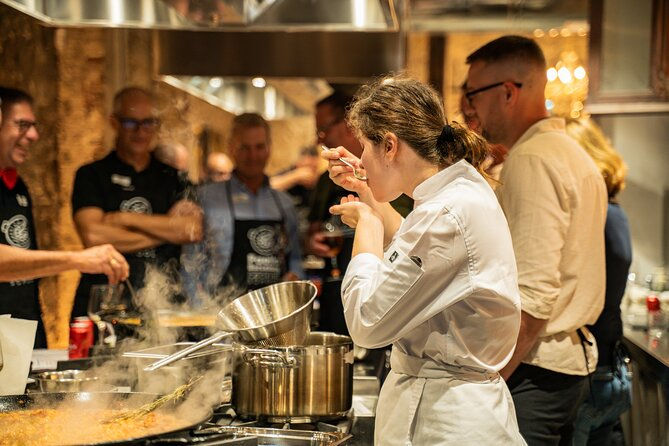
Because paella has become such a symbol of Spanish food abroad, many visitors want to learn to cook it firsthand. If you’re in Barcelona, you can join a hands-on paella cooking class and learn the technique directly from local chefs, including the regional differences discussed in this article.
For a deeper, more guided experience, a premium paella masterclass in Barcelona walks you through ingredient sourcing, rice selection, and cooking technique in a small group setting.
Desserts and Drinks: Catalan Cuisine vs Spanish Cuisine
Dessert habits split along the same regional lines as everything else on this list.
Common desserts across Spain include:
Turrón, a nougat made with almonds and honey, common at Christmas
Flan, a baked custard with caramel topping
Churros, fried dough often served with thick hot chocolate
Catalan desserts take a different route. Crema catalana, a custard with a caramelized sugar crust, looks similar to French crème brûlée but predates it in most historical accounts. Panellets, small almond and pine nut sweets, appear specifically around All Saints’ Day in Catalonia and rarely show up in other regions.
Drinks follow a similar pattern. Sangria gets marketed abroad as the national drink of Spain, but you’ll rarely see locals order it in Barcelona. Catalans favor cava, a sparkling wine made using the same method as Champagne, produced almost entirely in the Catalan town of Sant Sadurní d’Anoia.
Vermut, a fortified wine served before lunch, also holds a bigger place in Catalan drinking culture than in most other Spanish regions.
If you want an easy way to spot a tourist menu versus a local one in Barcelona, check the drink list. A heavy focus on sangria usually signals a menu built for visitors rather than one built around Catalan habits.
Common Myths About Catalan Cuisine vs Spanish Cuisine
A few myths keep circulating among travelers. Clearing them up will help you order better food and sound less like a first-time visitor.
Myth: Paella is a national Spanish dish eaten everywhere. Reality: paella is regional, tied to Valencia, and treated as a special-occasion dish rather than a daily meal in most of Spain.
Myth: Sangria is what locals drink daily. Reality: sangria is mostly served to tourists. Locals reach for wine, vermut, or beer.
Myth: Tapas are a Catalan invention. Reality: tapas culture is broader Spanish, with roots often traced to Andalusia and central Spain.
Myth: All Spanish food is spicy. Reality: Spanish cuisine rarely uses chili heat. Smoked paprika adds color and depth, not spice.
Myth: Catalan food is just Spanish food with a different name. Reality: Catalan cuisine has its own ingredients, sauces, and cooking methods, shaped by a separate historical path.
Once you know these distinctions, menus in Barcelona start making a lot more sense.
Cooking Techniques and Flavor Profiles
Spanish cuisine leans on high heat and quick cooking. Frying, grilling, and searing dominate.
Catalan cuisine leans on the slow build of flavor. Core techniques include:
Sofregit: a slow-cooked base of onion, tomato, and garlic
Picada: a paste of nuts, garlic, and herbs added at the end of cooking to thicken and season a dish
Confit-style cooking for duck and pork
These two techniques, sofregit and picada, appear in most traditional Catalan recipes. They don’t show up nearly as often outside the region.
Flavor-wise, Spanish cuisine overall favors bold, direct flavors: garlic, paprika, citrus. Catalan cuisine favors layered, built-up flavor through slow reduction and roasted elements, a contrast also noted in Encyclopedia Britannica’s overview of Spanish food history.
If you taste a dish and can’t identify a single dominant flavor, but instead notice something rounded and complex, you’re probably eating Catalan food.
Regional Influences on Catalan Cuisine vs Spanish Cuisine
Geography shapes every regional cuisine in Spain.
Andalusia: cold soups, frying, heavy olive oil use, Moorish influence
Galicia: seafood, octopus, Atlantic coast ingredients
Basque Country: pintxos, high-end seafood, strong culinary reputation
Valencia: rice dishes, citrus, Mediterranean vegetables
Catalonia: mar i muntanya, French influence, sauces built on nuts and bread
Catalonia’s proximity to France pulls its food closer to French technique than any other Spanish region. You’ll notice this in the use of butter, wine reductions, and refined plating styles in modern Catalan restaurants.
This regional variety is exactly why lumping Spanish food into one category misses so much. Each region, Catalonia included, built its food culture around local geography, trade routes, and history.
Climate plays a bigger role than most visitors realize. Northern regions like Galicia and the Basque Country sit against the cold Atlantic, which pushes their cuisine toward seafood stews and hearty, warming dishes. Southern regions like Andalusia sit under intense heat for most of the year, which explains the popularity of cold soups like gazpacho and salmorejo. Catalonia sits in between, with a Mediterranean coastline on one side and mountains on the other, giving it access to both cold-weather and warm-weather ingredients within a short drive.
Kitchen Essentials for Cooking Catalan or Spanish Food
If you want to cook either style at home, your pantry needs specific staples.
Spanish kitchen essentials:
Extra virgin olive oil
Smoked paprika, pimón
Saffron threads
Short-grain rice, bomba rice
Sherry vinegar
Catalan kitchen additions:
Marcona almonds and hazelnuts, for picada and romesco
Ripe tomatoes, for pa amb tomàquet
Dried ñora peppers, for romesco sauce
Botifarra sausage
Good crusty bread
For a full breakdown of what to stock and why, this Spanish kitchen essentials guide covers the details region by region.
Market Culture and Seasonal Eating
Markets shape both cuisines, but in different ways.
Spanish markets across the country tend to organize around a central hall, with vendors selling meat, fish, produce, and cheese under one roof. Madrid’s Mercado de San Miguel and Seville’s Mercado de Triana follow this format, mixing daily grocery shopping with tapas bars built into the same space.
Barcelona’s La Boqueria works similarly on the surface, but the produce tells a different story. You’ll find a heavier presence of wild mushrooms in autumn, calçots (a type of grilled spring onion) in late winter, and a wider variety of legumes year-round. Catalan cooking follows the seasons closely, and calçotada season, when whole villages gather to grill calçots over open flames, has no direct equivalent elsewhere in Spain.
Seasonal eating also shapes menus at restaurants. A Catalan menu in December looks noticeably different from one in July, shifting from hearty stews and slow-roasted meats to grilled seafood and cold vegetable dishes like escalivada. Spanish cuisine in other regions shifts too, but rarely with the same ritual attached to specific ingredients.
If you visit Barcelona between late January and March, keep an eye out for calçotada events. Locals treat the calçot harvest as a genuine food holiday, complete with bibs, romesco sauce for dipping, and long communal tables.
Dining Culture and Meal Structure
Meal timing and structure differ too.
Across Spain generally:
Lunch is the largest meal, often eaten between 2 and 4 PM
Dinner is light and late, often after 9 PM
Tapas culture encourages sharing multiple small dishes
In Catalonia specifically:
Meals often build around a first course, such as soup or salad, and a second course of meat or fish
Sunday lunches are long, multi-course family events
Bread with tomato appears as a near-constant side, not an occasional extra
You’ll also notice a stronger sit-down restaurant culture in Catalonia compared to the more casual, bar-hopping tapas style found in cities like Madrid or Seville.
A few etiquette notes worth knowing before you travel:
Tipping in Spain, including Catalonia, is modest. Rounding up or leaving a small percentage is standard, not the larger tips expected in the United States
Lunch reservations in Catalonia often run later than in northern Europe, but earlier than in Madrid or Andalusia
Ordering pa amb tomàquet as a side is normal in Catalonia and rarely questioned by servers, even outside of set tapas menus
Splitting the bill evenly, rather than itemizing individual orders, is common practice among groups across most of Spain
These small habits add up. Knowing them means you’ll blend in a little more and avoid the awkward pause that comes from ordering out of step with local norms.
Where to Experience Catalan Cuisine vs Spanish Cuisine in Barcelona
Reading about food differences only goes so far. Tasting them side by side makes the difference click.
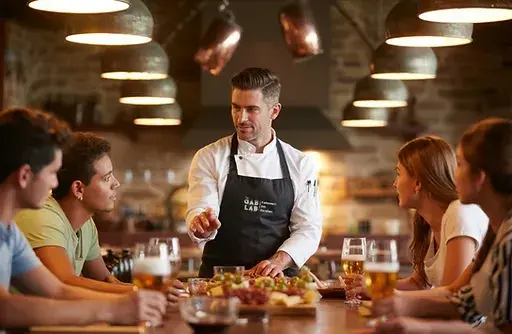
Barcelona gives you access to both worlds. You can explore Catalan cuisine through small family-run restaurants, and you can experience the broader Spanish tradition of paella through structured cooking experiences.
A few ways to explore this hands-on:
Join a paella class in Barcelona to learn Valencian technique firsthand
Book a private group cooking experience if you’re traveling with family or friends
Organize a team building workshop for a corporate group that wants a shared cultural activity
Join a paella class in Barcelona to learn Valencian technique firsthand.
Book a private group cooking experience if you’re traveling with family or friends.
Organize a team building workshop for a corporate group that wants a shared cultural activity.
You can browse all available experiences directly through Gastronomic Arts Barcelona, where local chefs walk you through the techniques, history, and flavor differences covered in this article.
Frequently Asked Questions
Is Catalan food the same as Spanish food?
No. Catalan cuisine is a regional cuisine within Spain, with its own ingredients, techniques, and history distinct from other Spanish regions.
Is paella Catalan or Spanish?
Paella originated in Valencia. Catalonia developed its own variations, but the original dish is Valencian, not broadly Spanish and not Catalan.
What is the most Catalan dish?
Pa amb tomàquet, bread rubbed with tomato and olive oil, represents Catalan cuisine more than any single dish.
Why does Catalonia have its own cuisine?
Catalonia has its own language, history, and trade relationships, particularly with France and Italy, that shaped a distinct food culture over centuries.
Can I learn to cook both styles in Barcelona?
Yes. Cooking classes in Barcelona, including paella-focused sessions, teach both Valencian technique and Catalan variations side by side.
Is Catalan food spicier than the rest of Spain?
No. Catalan cuisine relies on roasted vegetables, nuts, and slow-cooked bases for flavor rather than heat. Spanish cuisine as a whole rarely uses chili spice.
What should I order to taste real Catalan cuisine?
Start with pa amb tomàquet, then try escalivada or suquet de peix. For a heartier meal, order botifarra amb mongetes.
Do Catalans consider themselves Spanish when it comes to food?
Many Catalans view their food culture as distinct rather than a subset of Spanish cuisine, tied closely to Catalonia’s separate language and history.
Final Thoughts on Catalan Cuisine vs Spanish Cuisine
Catalan cuisine and Spanish cuisine share a country, but not a single food identity. One reflects the entire nation’s layered history. The other reflects a specific region shaped by its own language, geography, and trade routes.
Next time you sit down at a restaurant in Barcelona, look at the menu differently. Ask which dishes are Catalan and which represent Spain as a whole. That question alone will change how you order, and how you understand the plate in front of you.
You now know the difference between pa amb tomàquet and gazpacho, between romesco and alioli, between a Valencian paella and a Catalan arròs negre. Carry that knowledge to the table. Order with intent. Ask your server where a dish comes from.
You’ll eat better, and you’ll understand Barcelona’s food scene the way a local does, not the way a guidebook simplifies it.
If you want to taste the difference rather than just read about it, book a paella cooking class and see how Valencian tradition and Catalan technique compare, side by side, in your own hands.


Comments