
Can Corporate Event Agencies Use Cooking Classes as Client Entertainment Experiences?
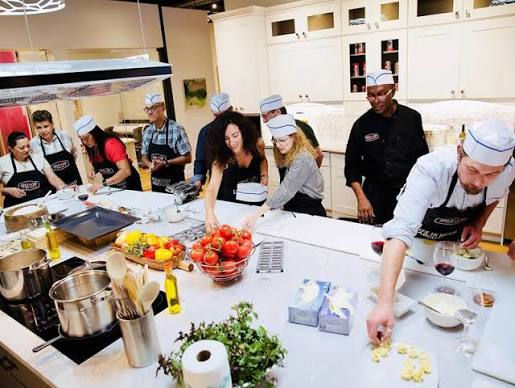
Corporate clients want more from an event than a meal and a room. They want an experience people remember and a setting that helps relationships grow. That creates a challenge for event agencies: how do you entertain clients without repeating the same dinners, drinks, or sightseeing formats? Cooking classes offer a practical answer because guests participate, talk, learn, and eat together. In this guide, you will see how agencies can use cooking classes for client entertainment, choose the right format, manage logistics, protect the client relationship, and build a stronger Barcelona event package.
Why Client Entertainment Needs a More Participatory Format
A client dinner can be useful, but it can also create a passive experience. Guests sit at a table, talk to the people beside them, and leave when the meal ends. A cooking class changes that structure.
Guests work in small groups. They make decisions. They ask questions. They share tasks. Then they sit down and eat what they created.
For an agency, that creates more opportunities for conversation without forcing networking into the schedule. A chef can guide the group while the agency team manages the wider event.
This matters when you are entertaining existing clients, prospective accounts, partners, distributors, executives, or incentive groups. The experience can support a relationship without making the event feel like a sales meeting.
Can Corporate Event Agencies Use Cooking Classes as Client Entertainment Experiences?
Yes. Corporate event agencies can use cooking classes as client entertainment experiences when the class matches the client profile, group size, schedule, budget, and purpose of the event. The strongest programs treat the cooking class as part of the client journey rather than as a random activity added between meetings.
A cooking experience can work for:
Client appreciation evenings
Executive dinners
VIP hospitality programs
Corporate retreats
Incentive travel
Sales partner events
Distributor and reseller gatherings
Conference side events
Product launch hospitality
Small-group networking programs
Post-meeting entertainment
Pre-dinner or pre-cruise activities
Barcelona gives agencies another advantage. Turisme de Barcelona describes the city as a strong food and wine destination and highlights hands-on experiences such as market activities, workshops, tastings, and culinary trails. That makes a cooking class easier to position as part of the destination itself rather than as a generic indoor activity.
For destination context, see Barcelona Tourism: Food and Wine.
What Makes a Cooking Class Strong Client Entertainment?
The activity needs more than a good menu. Corporate entertainment works when the format supports the reason the agency brought the group together.
Client need | Cooking class response | Agency value | Example |
Relationship building | Shared tasks and conversation | More natural interaction | VIP client dinner |
Local experience | Regional recipes and ingredients | Stronger destination story | Catalan cooking workshop |
Team connection | Small cooking teams | Shared activity before dinner | Executive retreat |
Brand experience | Custom menu or theme | More room for client messaging | Product-themed menu |
Memorable entertainment | Guests create and eat together | Clear activity narrative | Conference side event |
Flexible scheduling | Short or extended formats | Fits around meetings | 2.5-hour evening program |
Cooking Classes Give Agencies More Control Over the Guest Experience
A restaurant gives you a finished product. A cooking workshop gives you a sequence of moments that can be planned around the client.
Arrival and welcome drink
Chef introduction
Ingredient or market story
Hands-on preparation
Small-group interaction
Cooking demonstration
Shared meal
Wine, cava, beer, or non-alcoholic pairing
Client recognition or short remarks
Photos and closing moment
This structure also gives the agency useful points for branding, photography, client messaging, and hospitality. The key is to keep branding connected to the experience. A guest should feel hosted, not advertised to.
Best Cooking Class Formats for Corporate Client Entertainment
1. Chef-Led Private Cooking Class
This works well for senior clients and smaller groups. A chef leads the class while guests participate at their own level. The agency can keep the schedule private and shape the welcome, menu, drinks, and closing.
2. Paella and Spanish Cooking Experience
A paella-focused class gives international clients a clear connection to Barcelona and Spanish food culture. It also creates a simple group task. Guests can prepare ingredients, learn the cooking process, and share the final dish.
3. Tapas and Sangria Workshop
This format can suit informal client entertainment. Guests can move through several small dishes while learning about local ingredients. It can also work before a larger dinner or as the main evening activity.
4. Cooking Challenge
A light competition can work for sales teams, partner groups, and younger corporate audiences. Keep the challenge simple. The goal is interaction, not culinary skill.
5. Premium Culinary Experience
For VIP clients, agencies can build a more curated experience around a chef, premium ingredients, wine or cava pairings, and a private dining format. The experience should feel controlled from arrival to departure.
6. Custom or White-Label Cooking Experience
Agencies that want the event to sit under their own client program can explore a white-label approach. This can help an agency package the cooking class as part of a broader destination or hospitality product.
See how agencies can think about Barcelona cooking white-label packages when creating a branded client experience.
How Corporate Event Agencies Can Package Cooking Classes
The easiest way to sell the experience is to package it around the client's objective. Do not present only a cooking class. Present the role it plays in the event.
Package | Best for | Core experience | Add-ons | Main selling point |
Client Appreciation | Existing clients | Private cooking + dinner | Drinks, gifts, photos | Relationship focus |
Executive Hospitality | Senior leaders | Chef-led private class | Premium pairing | Privacy and service |
Barcelona Discovery | International visitors | Local cooking workshop | Market visit, tasting | Destination connection |
Conference Social | Conference attendees | Short cooking session | Transfers, drinks | Easy networking |
Incentive Evening | Top performers | Hands-on culinary event | Entertainment, awards | Shared memory |
Partner Experience | Distributors and resellers | Team cooking challenge | Prizes, branded menu | Interaction |
How to Match the Cooking Class to the Client
Ask these questions before you recommend a format:
Who are the guests?
Are they senior executives, sales partners, customers, or mixed groups?
How familiar are they with Barcelona and Spanish food?
Does the client want networking, appreciation, entertainment, or team connection?
How much time do you have?
Does the group need a private venue?
Are there dietary restrictions or accessibility requirements?
Does the client need branding or a custom menu?
Will the group continue to another dinner, show, hotel, or cruise?
What should guests remember about the experience?
A Simple Scoring Chart for Selecting a Cooking Class
Use a 1–5 score for each factor when comparing suppliers. The example below is a planning framework, not a market-wide rating.
How Agencies Can Build a Client Entertainment Itinerary Around Cooking
The cooking class does not have to stand alone. It can become one part of a complete client itinerary.
Time | Activity | Purpose |
17:30 | Private transfer and arrival | Give guests enough time to settle in. |
18:00 | Welcome drink | Use this time for informal introductions. |
18:15 | Chef introduction | Explain the menu and local story. |
18:30 | Hands-on cooking | Create small groups and shared tasks. |
19:30 | Shared meal | Move into relaxed client conversation. |
20:15 | Client recognition or remarks | Keep speeches short. |
20:30 | Photos and closing | Create a natural final moment. |
20:45 | Transfer or next activity | Continue the wider itinerary. |
Using Cooking Classes for Different Client Types
Existing Clients
The goal is appreciation. Avoid turning the event into a product presentation. Give the client space to talk, meet your team, and enjoy the city.
Prospective Clients
The experience can support relationship building before or after a business meeting. Keep sales messaging light. Your service quality should demonstrate the agency's value.
International Corporate Groups
A local cooking class can give visitors something they cannot reproduce through a standard hotel dinner. Barcelona's food culture becomes part of the client experience.
Executive Groups
Executives often need privacy, timing control, quality service, and a comfortable setting. A private class can provide these conditions when the venue and supplier can handle the requirements.
Sales and Partner Groups
A shared task can help people who already know each other interact in a different setting. A simple team challenge can add energy without requiring a full team-building program.
Why Barcelona Works for Culinary Client Entertainment
Barcelona gives corporate event agencies a strong destination story because food, markets, wine, tapas, Catalan cuisine, and Mediterranean traditions can all support the event narrative. The city's tourism board specifically promotes food and wine experiences for travel trade professionals, including workshops and activities that let visitors engage directly with local cuisine.
Agencies planning destination programs can also review food-focused Barcelona itineraries and cooking workshops.
That destination link matters for corporate clients. A cooking class can answer a simple question: why are we doing this activity here instead of in any other city?
Use Cooking Classes as Part of a Larger Travel Program
Event agencies often work with destination management companies, travel advisors, hotels, cruise programs, and other suppliers. Cooking classes can connect with these partners instead of competing with them.
Cooking Classes Can Extend Beyond Corporate Meetings
The same supplier relationships can support other client programs. Destination weddings, hotel guest experiences, incentive travel, and cruise excursions can all use culinary formats.
For destination wedding programs, see cooking classes featured in destination wedding experiences.
Hotels can also look at boutique hotel culinary welcome experiences as a related hospitality format.
How to Handle Logistics Before You Confirm the Supplier
A strong concept can fail if the operational details do not work. Corporate event agencies should confirm the practical points before presenting the activity as final.
Maximum and minimum group size
Exact event duration
Venue location and transfer time
Kitchen capacity and workstation layout
Chef-to-guest ratio
Dietary and allergy handling
Vegetarian, vegan, halal, gluten-free, or other menu needs
Alcohol and non-alcoholic beverage options
Private-use availability
Branding and signage rules
Photography permissions
Cancellation terms
Rain or weather backup if any part is outdoors
Accessibility
Payment schedule and final guest-count deadline
Eventbrite's food event guidance also points to practical factors such as space, equipment, clear instruction, and group size. These details should sit inside your supplier checklist, not after the client has already approved the program.
See Eventbrite's food event management guidance for related planning considerations.
How to Make the Experience Feel Personal
Personalization does not require a completely custom event. Small changes can make the program feel designed for the client.
Use a menu connected to the client's home market or destination.
Add a short story about the ingredients.
Give the group a private welcome.
Use the client's preferred beverage format.
Create a simple printed menu with the client event name.
Offer a recipe card guests can take home.
Arrange seating to support the intended networking groups.
Add a short client recognition moment.
Coordinate photography around the cooking and final meal.
Should You Offer a Cooking Class to Every Corporate Client?
No. The format works best when the client's goals and audience support it.
Strong fit | Possible fit | Weak fit |
Small or mid-size groups | Very large groups with multiple stations | Groups needing a formal seated dinner only |
Clients who value participation | Mixed-age or mixed-skill groups | Guests with very limited mobility unless the venue supports them |
Destination visitors | Time-limited conference groups | Programs with almost no flexible time |
Relationship-focused events | Light team-building | Strictly formal protocol events |
Private hospitality | Partner events | Events where cooking conflicts with the dress code or schedule |
How to Present the Idea to Your Corporate Client
Do not lead with the phrase 'We found a cooking class.' Lead with the business purpose.
A stronger pitch sounds like this:
“We recommend a private Barcelona cooking experience where your guests work together with a chef, learn a local dish, and sit down for a shared meal. It gives the group a relaxed setting for client conversation while adding a clear connection to Barcelona.”
This wording tells the client what happens, why it fits, and what guests gain. It avoids selling the activity as a generic attraction.
How Corporate Event Agencies Can Measure the Experience
Client entertainment is not always measured by direct revenue. Agencies can still track useful signals.
Metric | Question to track |
Attendance rate | Did invited guests attend? |
Participation | Did guests take part in the activity? |
Client feedback | What did guests say about the experience? |
Networking quality | Did guests interact beyond their usual contacts? |
Repeat requests | Did the client ask for a similar experience later? |
Referral potential | Did the event lead to introductions or new opportunities? |
Supplier performance | Did the supplier meet the agreed service level? |
Cvent also frames event planning around attendee experience and proving event value. Agencies can apply the same thinking to client entertainment by defining what a successful experience should produce before the event begins.
See Cvent event planning solutions for more on attendee experience and event measurement.
A Practical Supplier Brief for a Cooking Class
Send suppliers a clear brief. This reduces back-and-forth and helps you compare proposals.
Event date and preferred time
Number of guests
Guest profile
Client objective
Preferred cuisine or destination theme
Private or shared format
Desired duration
Food and beverage requirements
Dietary restrictions
Branding needs
Photography needs
Transfer requirements
Budget range
Required proposal deadline
A 7-Step Process for Agencies
1. Define the client entertainment goal.
2. Profile the guests and their expectations.
3. Choose the cooking format and group size.
4. Check venue, menu, accessibility, timing, and dietary requirements.
5. Build the activity into the wider itinerary.
6. Present the experience around client value, not just the activity.
7. Collect feedback and supplier performance data after the event.
Common Mistakes to Avoid
Choosing the activity before understanding the client.
Ignoring transfer time between the hotel, meeting venue, and kitchen.
Using a format that is too complex for the available time.
Failing to confirm dietary needs early.
Treating all corporate groups as the same.
Adding too much branding inside the cooking area.
Forgetting that senior guests may want privacy.
Choosing a venue that cannot comfortably handle the confirmed group size.
Leaving no time for the final meal and conversation.
Selling the activity without explaining its role in the overall event.
Can Cooking Classes Improve Client Relationships?
They can create a better setting for relationship building because the interaction happens during a shared activity. The cooking task gives guests something to discuss when a direct networking conversation might feel forced.
The value comes from the combination of participation, hospitality, local context, and time together. A cooking class should not replace thoughtful client service. It should give that service a stronger setting.
Final Takeaway for Corporate Event Agencies
Can corporate event agencies use cooking classes as client entertainment experiences? Yes, when the experience matches the client, the destination, and the event goal.
A well-planned cooking class can give agencies a practical way to create interaction, introduce local culture, support client hospitality, and build a memorable part of the itinerary.
Barcelona is especially suitable when the client wants food, culture, and participation in the same program. The strongest agency approach is simple: define the client goal first, choose the right cooking format second, and build the experience into the wider event journey.



Comments