
Can Culinary Experiences Serve as Add-Ons to Barcelona Cruise Shore Excursions?

Introduction
Barcelona gives cruise passengers only a limited window to explore the city, yet food can add a strong local element to that short visit. The challenge is fitting a culinary activity into a port-day schedule without creating rushed transfers or return-to-ship pressure. The answer can be a carefully timed cooking class, food workshop, tasting, or chef-led experience added to a wider shore excursion. This guide explains how cruise planners, travel advisors, DMCs, and cruise passengers can build culinary experiences into Barcelona shore excursions and create a better use of time ashore.
Can Culinary Experiences Serve as Add-Ons to Barcelona Cruise Shore Excursions?
Yes. Culinary experiences can work as add-ons when the activity matches the cruise schedule, transfer time, group needs, and guest interests.
Barcelona already has a strong connection between tourism and food. Turisme de Barcelona promotes cooking workshops, food and wine activities, markets, tastings, and other ways for visitors to experience local cuisine. Its travel-trade material also presents food and wine experiences as a way to connect visitors with Barcelona's culture and local products.
For cruise passengers, this creates a useful option. Instead of adding another sightseeing stop, a travel planner can add a culinary activity to a city tour, market visit, cultural itinerary, or private excursion.
The key question is simple:
Can the experience fit the port call without making the day stressful?
If the answer is yes, food can become more than a meal. It can become one of the main parts of the shore experience.
Why Culinary Experiences Work Well for Cruise Shore Excursions
Cruise passengers often have different reasons for visiting Barcelona.
Some want to see famous landmarks.
Some have visited Barcelona before and want something different.
Some travel with children.
Others want a private experience for a family, corporate group, wedding party, or group of friends.
A culinary activity can serve several of these needs at once.
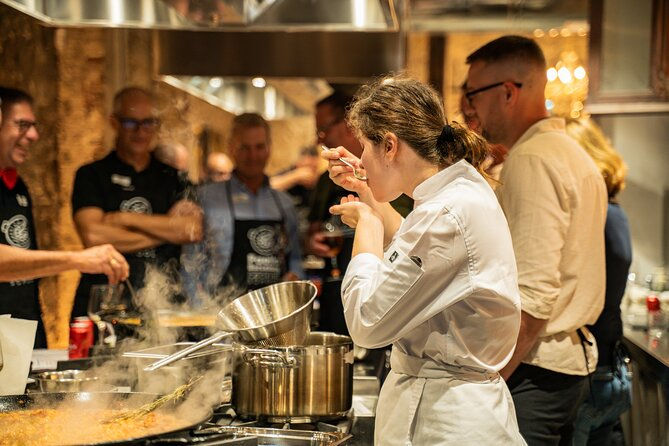
A cooking class gives guests something to do, not just something to see. A paella workshop, for example, can introduce participants to ingredients, preparation methods, local food traditions, and the social side of Spanish dining.
Turisme de Barcelona describes cookery workshops as a way for visitors to learn how to prepare local dishes and take that knowledge home. That makes a cooking class suitable for travelers who want an activity they can remember and repeat after the cruise.
Barcelona's official tourism resources also list food and wine experiences, markets, cooking activities, and other gastronomy-focused activities for visitors.
What Makes a Culinary Add-On Suitable for Cruise Passengers?
A good cruise add-on needs to meet several practical requirements.
1. A clear duration
Cruise passengers cannot treat their day ashore like hotel guests with unlimited time.
A culinary activity should have a clearly defined start and end time.
A short class may fit beside a landmark visit.
A longer private cooking experience may work better as the main activity of the excursion.
2. Simple transportation
Guests should know how they will move between the cruise terminal, sightseeing locations, culinary venue, and ship.
The Port of Barcelona operates several cruise terminals, including Terminal A, B, C, D, E-Helix, MSC, and WTCB. Terminal locations can affect transfer planning.
3. A return buffer
The itinerary should not finish at the exact all-aboard time.
Cruise passengers need time for transportation, terminal procedures, security, and unexpected delays.
A culinary partner should provide a realistic finishing time rather than treating the published class duration as the entire shore-excursion schedule.
4. Group flexibility
A couple may want a shared class.
A family may want a private session.
A cruise group may need a larger booking.
The culinary provider should have options for different group sizes.
5. Dietary planning
Food experiences need to account for allergies, vegetarian guests, and other dietary requirements before the activity starts.
For travel partners, this should be part of the booking process rather than something discovered when guests arrive.
Can a Barcelona Cooking Class Be Added to a Cruise Shore Excursion?
Yes, especially when the class has a fixed duration and the itinerary leaves enough time for transportation.
For example, a cruise planner could build a half-day experience like this:
Cruise terminal→ transfer into central Barcelona→ short sightseeing stop→ cooking class→ meal→ return transfer→ cruise terminal
Another option is:
Cruise terminal→ food market visit→ cooking class→ lunch→ short city walk→ return to ship
The second option creates a stronger food-focused itinerary because guests see ingredients before using them in the kitchen.
Barcelona's tourism office already highlights experiences that combine markets and cooking. It also promotes gastronomy as a way to understand the city and Catalan culture.
What Types of Culinary Experiences Can Be Added?
Not every cruise passenger wants the same food activity.
Travel planners can consider several formats.
Paella cooking class
A paella class is one of the most obvious choices for visitors who want a hands-on Spanish cooking experience.
Guests can learn about ingredients, preparation methods, cooking techniques, and the role of rice dishes in Spanish food culture.
Market and cooking experience
A market visit followed by cooking creates a clear story.
Guests see ingredients first.
They learn how local produce is selected.
They then use ingredients during the cooking activity.
This format can work well for travelers who want both sightseeing and food.
Tapas workshop
A tapas-focused session can suit guests who want a shorter experience.
It can also work as part of a broader food tour.
Catalan cooking experience
A Catalan-focused activity gives guests a more specific connection to the region rather than presenting food only as generic Spanish cuisine.
Private chef-led experience
Private sessions can suit premium cruise groups, families, travel advisors, and guests celebrating an occasion.
These sessions can also make scheduling easier because the itinerary can be designed around the group's timing.
Family cooking experience
Families may prefer a hands-on activity over a long museum visit.
A cooking class can give children an active role while adults learn about local cuisine.
How to Combine Sightseeing and Culinary Activities
The strongest itinerary does not try to visit every major attraction.
Instead, it chooses a small number of connected activities.
Itinerary | Culinary element | Best for |
Gothic Quarter + cooking class | Hands-on class | First-time visitors |
La Boqueria + cooking class | Market and cooking | Food-focused guests |
Gaudí visit + lunch experience | Culinary meal | Culture and food travelers |
Private city tour + chef-led class | Private cooking | Families and premium groups |
Barcelona highlights + tapas | Tapas experience | Short port calls |
Market visit + paella workshop | Cooking and lunch | Food lovers |
City tour + private culinary session | Tailored experience | Cruise groups |
The goal is not to fill every minute.
The goal is to create a realistic sequence.
Barcelona's maritime and central areas also give visitors access to food, markets, waterfront areas, and cultural attractions, which can make combined itineraries practical when travel time is planned carefully.
How Much Time Should You Allow?
Time planning matters more for cruise passengers than for hotel guests.
A useful planning model is:
Activity | Suggested planning window |
Cruise terminal departure | 15–30 minutes |
Transfer into the city | Depends on terminal and traffic |
Sightseeing stop | 45–90 minutes |
Culinary activity | 2–3.5 hours |
Meal | Often included in the culinary activity |
Return transfer | Depends on venue and traffic |
Ship return buffer | Build in additional time |
These are planning ranges, not fixed operating times.
The actual schedule should depend on the ship's port call, terminal, venue location, traffic, group size, and the agreed excursion plan.
A good itinerary asks:
What happens if the transfer takes longer than expected?
What happens if guests arrive late?
What happens if the cooking class runs over?
What happens if the ship changes its port schedule?
A cruise excursion needs answers to these questions before guests arrive.
How Can Travel Partners Build the Experience Into an Itinerary?
Travel partners can package the culinary activity instead of selling it as an unrelated extra.
A DMC could offer:
Barcelona city highlights + paella class
Gothic Quarter + tapas workshop
Market tour + cooking class + lunch
Private driver + chef-led cooking experience
Family sightseeing + children's cooking experience
Luxury private tour + private culinary session
This approach gives the traveler one clear itinerary.
It also gives the travel advisor a simple product to explain.
For cruise-focused planning, the culinary provider should share the information needed by the partner:
Experience duration
Meeting point
Group capacity
Dietary options
Language options
Private booking options
Cancellation terms
Booking lead time
Availability process
Marketing materials
Photos and videos
Contact details
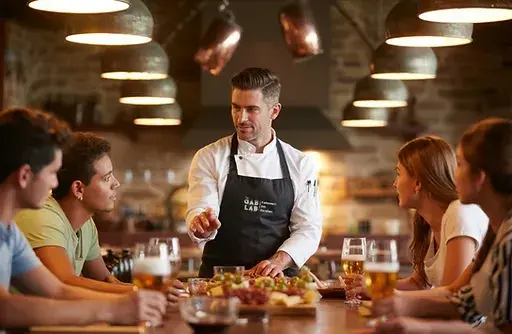
GAB LAB can be positioned within this type of partner workflow.
For example, travel partners looking at dietary requirements can review the GAB LAB resource about accommodating dietary requirements for partner bookings before presenting a culinary experience to cruise guests.
They can also review options for vegetarian and special-diet cooking experiences when building packages for mixed groups.
Why Dietary Requirements Matter for Cruise Groups
A cruise group may include guests with different dietary preferences.
One guest may be vegetarian.
Another may avoid specific ingredients.
Another may have an allergy.
This creates a planning issue if the culinary activity is added at the last minute.
Travel partners should collect relevant dietary information during booking.
A useful booking form can ask:
Number of guests
Dietary restrictions
Allergies
Vegetarian or vegan requirements
Children in the group
Preferred language
Private or shared experience
Preferred start time
For more detail, partners can review the GAB LAB resource about dietary requirements and its resource about vegetarian and special-diet cooking experiences.
This helps the partner set expectations before the cruise day.
Can Private Culinary Sessions Work for Cruise Groups?
Yes.
Private sessions can be useful when the group has a specific schedule.
A private booking may work well for:
Families
Friends traveling together
Corporate cruise groups
Premium cruise guests
Wedding groups
Multi-generational travelers
Small private tours
A private session can also make the experience easier to match with the rest of the itinerary.
For example, a DMC could arrange a private cooking session after a morning city tour.
The group then eats what they prepared before returning to the ship.
GAB LAB also provides information for partners interested in private sessions instead of shared cooking classes and large private-group quotes.
How Group Size Changes the Experience
Group size affects more than price.
It can affect:
Kitchen space
Instructor attention
Timing
Transportation
Seating
Food preparation
Communication
Dietary planning
A small group can often move faster.
A large group may need more structured timing.
For large cruise groups, travel partners should confirm capacity and booking requirements early.
They can also review GAB LAB information about booking lead times and support for high-volume partner bookings.
This is especially useful during periods when cruise traffic is high.
How Can Travel Advisors Sell a Culinary Add-On?
The message should focus on the experience.
Instead of saying:
"Add a cooking class."
Say:
"Learn how to prepare a local dish in Barcelona and enjoy the meal you make before returning to your ship."
That gives the guest a reason to care.
A travel advisor can also position the activity around different guest types.
For food lovers:
"Spend part of your Barcelona port day learning local cooking techniques."
For families:
"Give everyone a hands-on activity instead of another sightseeing stop."
For repeat Barcelona visitors:
"See a different side of Barcelona through food."
For premium travelers:
"Book a private chef-led culinary experience designed around your group."
What Sales Materials Can Help?
Travel partners need content that makes the experience easy to sell.
Useful materials include:
Experience descriptions
Professional photos
Short videos
Menus
Sample itineraries
Group information
Dietary information
Booking instructions
FAQs
Brand guidelines
Private-event information
GAB LAB has resources covering sales materials, promotional materials, branding, and photo and video support for partner marketing.
A dedicated landing page can also help a travel company present the culinary experience without forcing guests to search through unrelated pages.
How Can Cruise Shore Excursions Use Private and Shared Options?
A simple product structure can make booking easier.
Shared cooking experience
Best for individual travelers and couples who want to meet other people.
Private cooking experience
Best for families, friends, premium travelers, and groups with specific timing.
Large-group culinary experience
Best for cruise groups and organized travel programs.
A partner does not need to sell every option to every customer.
Instead, match the format to the guest.
How Language Support Can Improve the Experience
Cruise passengers come from different countries.
Language can affect the quality of a hands-on class because guests need to understand instructions.
Travel partners should confirm language availability before booking.
GAB LAB provides information about available languages for partner bookings, which can help advisors match guests with the right experience.
This is especially useful for international cruise groups.
How Can a Culinary Experience Fit a Family Cruise Excursion?
Families often need a different pace.
Children may not enjoy several hours of walking or museum visits.
A cooking class gives them a task.
They can prepare ingredients, follow instructions, participate in cooking, and sit down for a meal.
A family itinerary might look like:
9:00 – Leave cruise terminal
9:30 – Barcelona sightseeing
10:30 – Transfer to culinary venue
11:00 – Cooking experience
13:00 – Meal
14:00 – Return transfer
14:30 – Optional short city stop
15:30 – Return toward cruise terminal
The exact timing depends on the ship and booking.
Families can also review GAB LAB information about children's cooking experiences when choosing an activity.
How Can Culinary Experiences Support Luxury Cruise Excursions?
Luxury travelers often look for privacy, personalization, and control over their schedule.
A private culinary experience can fit this model.
A travel advisor might combine:
Private vehicle
Local guide
Barcelona sightseeing
Private cooking class
Chef-led meal
Wine or non-alcoholic pairing
Flexible departure time
The experience becomes part of a larger private itinerary.
Luxury travel advisors can also explore GAB LAB information about arranging chef-led experiences for private clients in Barcelona.
How Can Culinary Experiences Support Destination Weddings and Special Groups?
Cruise travel sometimes involves celebrations.
A culinary experience can be used as a group activity before or after a cruise itinerary.
It may suit:
Bachelor and bachelorette groups
Family reunions
Anniversary trips
Birthday groups
Wedding guests
Corporate groups
A cooking activity creates a shared task.
Guests prepare food together and then eat together.
That makes it different from simply reserving tables at a restaurant.
GAB LAB also provides information about featuring cooking classes in destination wedding itineraries.
Can Travel Companies Bundle Cooking Classes With Other Services?
Yes.
A travel company can build a package around the cooking activity.
For example:
Package A
Barcelona city tour + shared cooking class
Package B
Private driver + market visit + private cooking class
Package C
Cruise transfer + sightseeing + paella workshop + lunch
Package D
Family tour + children's cooking experience
Package E
Luxury Barcelona tour + private chef-led culinary experience
The partner can then sell one complete itinerary instead of several disconnected bookings.
GAB LAB also has information for travel companies interested in bundling cooking classes into their packages.
How DMCs Can Use Culinary Experiences
Destination management companies can add culinary experiences to existing Barcelona programs.
A DMC may already handle:
Airport transfers
Cruise transfers
Guides
Hotels
Restaurants
Attractions
Private transportation
Group activities
Adding a cooking class gives the DMC another experience to include in its itinerary planning.
DMCs can review information about using hands-on culinary experiences within Barcelona itineraries and about building partner collaborations with GAB LAB.
This can help create packages that combine culture, food, and sightseeing.
How Booking and Availability Should Be Managed
Cruise groups need clear booking processes.
A partner should know:
How to request availability
How far in advance to book
What information to provide
How group sizes are confirmed
How dietary requirements are recorded
How private sessions are quoted
How booking changes are handled
What reporting is available after bookings
GAB LAB provides partner resources covering real-time availability, online partner bookings, booking reports, and partner support.
This can make the booking process easier for travel companies handling multiple guest groups.
Why Marketing Content Matters for Cruise Add-Ons
Cruise passengers often decide how to spend their limited time ashore before arriving.
The experience needs to be easy to understand.
A strong listing should answer:
What will I do?
How long does it take?
Where does it happen?
What is included?
Can children join?
Can dietary requirements be handled?
Is it private?
What language is available?
How do I get back to the ship?
Good photos can also help.
Travel partners can use GAB LAB resources covering partner branding, promotional materials, and photo and video content.
What Should a Cruise Shore Excursion Listing Include?
Use a clear format.
Experience name
Barcelona Cooking Experience for Cruise Passengers
Duration
State the expected activity duration.
Ideal for
Food lovers, families, private groups, cruise passengers, or other relevant audiences.
What guests do
Explain the cooking steps and cultural elements.
What guests eat
Describe the meal or dishes.
Meeting point
Give clear location information.
Transportation
Explain whether transfers are included.
Dietary options
State how guests can request dietary accommodations.
Group size
Give a clear range.
Return planning
Explain how the schedule fits into a port day.
Booking requirements
Explain when partners should book and what information they need to provide.
A Checklist for Travel Advisors
Before adding a culinary experience to a cruise excursion, ask:
What time does the ship arrive?
What time must guests return?
Which cruise terminal will they use?
How long is the transfer?
How long is the culinary activity?
Is the activity shared or private?
What group size is allowed?
Are children joining?
Are there dietary requirements?
What language do guests need?
Is lunch included?
Are drinks included?
What happens if the group arrives late?
How far in advance should the partner book?
What marketing materials are available?
Is real-time availability available?
If these questions have clear answers, the experience becomes easier to sell.
A Practical Example: Building a Barcelona Cruise Food Excursion
Imagine a family arrives in Barcelona on a cruise ship.
They have limited time.
They have already visited Sagrada Família on a previous trip.
They want something more interactive.
A planner could create:
9:00 – Leave cruise terminal
9:30 – Short guided walk through central Barcelona
10:15 – Transfer to culinary venue
10:45 – Cooking class begins
12:45 – Guests eat the dishes they prepared
13:30 – Leave culinary venue
14:00 – Short free-time stop
14:45 – Return transfer
15:15 – Arrive near cruise terminal
This itinerary gives the family a local activity without using the entire day on sightseeing.
The exact times should be adjusted to the ship's schedule and the confirmed venue.
A Second Example: Private Premium Group
A group of eight cruise passengers wants a private experience.
The travel advisor could arrange:
Private vehicle
Local guide
Short Barcelona sightseeing route
Private cooking class
Chef-led meal
Return transfer
The cooking class becomes the main experience rather than an extra stop.
This can work well for guests who have already seen Barcelona's main attractions.
A Third Example: Food-Focused Cruise Group
A group of food lovers may prefer:
Cruise terminal→ market visit→ ingredient discussion→ cooking class→ lunch→ short food walk→ return transfer
This creates a clear culinary theme from beginning to end.
The Role of GAB LAB in Cruise Culinary Experiences
GAB LAB can be presented as a culinary partner for travel companies that want to add cooking experiences to Barcelona itineraries.
Its partner-focused information covers areas such as:
Dietary requirements
Vegetarian and special diets
Private sessions
Large groups
Partner bookings
Booking reports
Real-time availability
Marketing materials
Branding
Photos and videos
DMC itineraries
Hotel referrals
Travel company packages
Luxury travel advisors
Destination weddings
Seasonal promotions
This matters because cruise excursion planning requires more than choosing a cooking class.
The partner also needs booking, marketing, group, and operational information.
How Can Culinary Experiences Add Value to a Cruise Day?
A culinary activity can add several benefits.
It creates participation
Guests do something rather than only looking at attractions.
It adds local context
Food can explain ingredients, traditions, and daily life.
It gives groups a shared activity
Families and friends can cook together.
It can suit repeat visitors
Guests who have already seen major attractions can explore Barcelona through food.
It can work with different group types
Private groups, families, couples, corporate travelers, and cruise groups can have different formats.
It creates a natural meal
The food prepared during the class can become part of the itinerary.
It can be packaged
Travel companies can combine the experience with sightseeing and transportation.
Can Culinary Experiences Serve as Add-Ons to Barcelona Cruise Shore Excursions?
They can, but the success depends on planning.
The culinary activity should fit the ship's schedule.
The transfer should be realistic.
The venue should match the group.
Dietary needs should be collected early.
The return journey should include enough buffer.
The experience should also have a clear purpose.
Ask yourself:
Does this activity give the traveler something they cannot get from a standard sightseeing stop?
If the answer is yes, a culinary add-on can make sense.
For cruise passengers, time is limited.
That makes every part of the itinerary important.
A well-planned cooking class, market experience, tapas activity, or chef-led session can give guests a way to experience Barcelona through its food while keeping the rest of the day manageable.
For travel advisors, DMCs, cruise excursion planners, and group organizers, the next step is to match the culinary format with the guest profile, port schedule, group size, and desired level of privacy.
Barcelona already has a strong tourism connection to food and hands-on gastronomy. The opportunity is to make that food experience fit the cruise itinerary rather than treating it as a separate activity.
Recommended Resources
External References



Comments