
What Is Authentic Spanish Paella? A Complete Guide

Authentic Spanish paella is a traditional rice dish from Valencia, on Spain's Mediterranean coast. It is cooked in a wide, shallow pan that allows short-grain rice to absorb rich flavors while developing a distinctive texture. The original Valencian version typically combines chicken, rabbit, green beans, garrofó beans, tomato, olive oil, saffron, and water.
Although paella is now enjoyed throughout Spain, its origins belong to Valencia. Seafood paella and other regional interpretations are popular, but they should not be confused with the original paella valenciana.
Understanding this difference is the first step toward appreciating one of Spain's most celebrated dishes.
Where Did Authentic Spanish Paella Originate?
Paella originated in the agricultural communities surrounding Valencia, particularly the fertile lands near the Albufera lagoon.
For generations, rice cultivation has shaped the region's food traditions. Farmers and rural families prepared meals using ingredients available from their fields, farms, and nearby markets.
They cooked rice in a broad metal pan over an open fire, often using locally available vegetables and meat.
What began as practical countryside cooking gradually became a meal associated with families, festivals, and social gatherings.
Today, paella remains an important symbol of Valencian cultural identity.
The Spanish Ministry of Culture documents Valencian paella-making as an important example of Spain's intangible cultural heritage.
Its significance extends beyond the finished dish. The tradition includes preparing ingredients, managing the fire, cooking together, and sharing a meal.
Why Valencia Matters
Valencia's climate, agricultural landscape, and rice-growing history contributed to the development of paella.
The Albufera area is especially important because it has supported rice cultivation for centuries.
Local vegetables, including particular varieties of green and white beans, became essential components of the traditional recipe.
This connection between place and food explains why paella is more than simply rice cooked with saffron.
It reflects the ingredients, agricultural knowledge, and social traditions of its birthplace.
What Ingredients Make Spanish Paella Authentic?
The ingredients depend on which style of paella you are preparing.
For traditional Valencian paella, the essential components usually include:
Rice: Spanish short- or medium-grain rice suitable for absorbing flavorful cooking liquid.
Chicken: Often bone-in pieces that contribute richness.
Rabbit: A traditional meat used in Valencian cooking.
Bajoqueta or ferradura: Local varieties of green beans.
Garrofó: Large, pale beans closely associated with Valencian paella.
Tomato: Used to build the dish's savory base.
Extra virgin olive oil: Important for cooking and flavor.
Saffron: Adds aroma and a characteristic golden tone.
Sweet paprika: Contributes warmth and depth.
Water and salt: Essential to the traditional cooking process.
Some regional or family recipes also use rosemary, snails, or other locally accepted ingredients.
Does Authentic Valencian Paella Contain Seafood?
Traditionally, no.
The classic Valencian recipe uses chicken, rabbit, and vegetables rather than prawns, mussels, or squid.
Seafood paella is a different Spanish rice preparation commonly associated with coastal cooking.
It can be a well-prepared, culturally meaningful Spanish dish, but it should not be presented as the original Valencian recipe.
This distinction matters because travelers sometimes assume that every traditional Spanish paella must contain seafood.
In reality, Spain has several established rice traditions, each with its own ingredients and local identity.
Is Chorizo a Traditional Paella Ingredient?
Chorizo is not a standard ingredient in traditional Valencian paella.
Some international recipes add it for a smoky, strongly seasoned flavor. However, this changes the profile of the original dish.
For someone trying to understand Valencian tradition, chicken, rabbit, beans, rice, and carefully balanced seasoning provide a more accurate starting point.
What Makes Paella Different From Ordinary Rice Dishes?
Paella is defined not only by its ingredients but also by the way the rice cooks.
Unlike risotto, which is frequently stirred to encourage a creamy texture, paella is generally left undisturbed once the rice has been distributed and the main rice-cooking stage begins.
This allows the grains to absorb liquid while preserving their individual structure.
Several elements make this possible.
1. The Wide, Shallow Pan
The traditional paella pan has a broad cooking surface and relatively low sides.
This shape helps distribute the rice in a thin layer and encourages even evaporation.
Using a pan that is too small for the quantity of rice can create a thick layer that cooks unevenly.
2. The Right Type of Rice
Rice selection has a major influence on texture.
Valencian rice varieties such as Bomba, Senia, and Albufera are associated with the region's rice-growing tradition.
They differ in their cooking characteristics, so the amount of liquid and cooking time should be adjusted to the specific rice.
Long-grain varieties, which are often selected for fluffy separate grains, generally do not reproduce the same results.
For a deeper explanation, read our guide to choosing the best rice for paella.
3. Balanced Flavor Development
Traditional paella develops flavor through the browning of ingredients, cooked vegetables, seasoning, and the liquid absorbed by the rice.
It does not need an excessive number of spices.
Each ingredient should contribute without overpowering the others.
4. Careful Heat Management
The heat must be strong enough to cook the rice and evaporate the liquid but controlled enough to avoid burning.
Cooking over an open fire is traditional, although a suitable burner or home stove can also produce excellent results.
The challenge is maintaining reasonably even heat across a wide pan.
What Is Socarrat in Spanish Paella?
Socarrat is the lightly toasted layer of rice that can develop at the bottom of a well-cooked paella.
It is prized for its concentrated flavor and delicate crispness.
However, there is an important difference between socarrat and burnt rice.
Good socarrat is golden or toasted, aromatic, and crisp. Burnt rice is excessively dark and bitter.
To encourage scorching, the cook needs to manage the final stage carefully as the remaining moisture evaporates.
Constant stirring prevents the rice from settling, while uncontrolled heat can burn it before the upper layer finishes cooking.
The goal is balance, not simply turning up the flame.
For more detailed guidance, explore our Spanish paella cooking techniques.
How Is Traditional Valencian Paella Prepared?
Although individual recipes vary, the traditional cooking process follows a recognizable sequence.
Step 1: Prepare the Ingredients
Choose an appropriate pan and measure the rice, meat, vegetables, seasoning, and cooking liquid.
Consistent preparation helps prevent timing problems later.
Step 2: Brown the Meat
Heat olive oil in the pan and brown the chicken and rabbit.
This develops the savory foundation of the dish.
Avoid rushing this stage, as well-browned ingredients contribute flavor to the cooking liquid.
Step 3: Cook the Vegetables
Add the green beans and other traditional vegetables.
Cook them with the meat before introducing the tomato and seasoning.
Step 4: Develop the Cooking Liquid
Add the tomato, paprika, water, and other appropriate seasonings in the sequence required by your recipe.
Allow the ingredients to cook so the liquid develops flavor.
Traditional Valencian methods commonly build this liquid in the paella pan itself rather than relying entirely on a separately prepared stock.
Step 5: Add the Rice
Distribute the rice evenly across the pan.
Once it is arranged for the main cooking stage, avoid repeatedly stirring it.
The rice should absorb the seasoned liquid as it cooks.
Step 6: Control the Heat
Begin with sufficient heat for the rice to cook, then adjust as needed.
The exact cooking time depends on the rice variety, pan, heat source, and amount of liquid.
Follow the characteristics of your chosen rice rather than relying on one universal cooking time.
Step 7: Rest Before Serving
When the rice is cooked and the excess liquid has evaporated, remove the pan from the heat.
A short resting period allows the dish to settle before serving.
For a detailed version with ingredients and measurements, consult the official Spanish tourism paella recipe.
What Are the Main Types of Spanish Paella?
Spain's rice culture includes several well-known styles.
Understanding them helps travelers appreciate the difference between regional tradition and culinary adaptation.
Paella Valenciana
This is the original Valencian preparation most closely associated with the dish's historical roots.
It generally includes chicken, rabbit, green beans, garrofó, rice, tomato, olive oil, and seasoning.
Traditional preparations may incorporate accepted local variations.
Seafood Paella
Seafood paella, or paella de marisco, usually features ingredients such as prawns, mussels, squid, or other seafood.
It uses a seafood-based cooking liquid and is particularly popular in coastal dining.
It is a distinct variation rather than the original Valencian meat-and-vegetable recipe.
Mixed Paella
Mixed paella combines meat and seafood.
It is familiar in many restaurants and tourist destinations, although it is not the classic Valencian preparation.
Vegetable Paella
Vegetable-based paella uses seasonal produce instead of meat or seafood.
It can provide an appealing option for people who prefer plant-based meals, while representing a modern or alternative approach rather than the historical Valencian recipe.
Authentic Valencian Paella vs. Barcelona-Style Paella
One of the most common questions among travelers is whether paella in Barcelona is truly authentic.
The answer depends on what is being prepared and how accurately it is described.
Paella originated in Valencia, not Barcelona.
Barcelona, however, has its own culinary identity shaped by Catalan cooking, Mediterranean seafood, local markets, and regional rice dishes.
Visitors can enjoy traditional Valencian-style paella in Barcelona, as well as seafood paella and other Spanish rice preparations.
A carefully prepared seafood paella does not become Valencian paella simply because it is cooked using similar techniques.
Respecting both dishes means recognizing their different identities.
For a closer look at these distinctions, explore our guide to Valencian and Barcelona paella.
Why Local Ingredients Matter in Barcelona
Barcelona's food culture is closely connected to fresh Mediterranean ingredients and neighborhood markets.
Markets such as La Boqueria help visitors discover seafood, seasonal vegetables, olive oil, spices, and other products used across Spanish and Catalan kitchens.
For someone learning Spanish cooking, understanding where ingredients come from adds another layer to the experience.
You are not only following instructions. You are learning how food connects to its surroundings.
Common Myths About Authentic Spanish Paella
Many misunderstandings come from restaurant adaptations and recipes created outside Spain.
Myth 1: All Paella Contains Seafood
The traditional Valencian recipe does not rely on seafood. Chicken, rabbit, and local beans are characteristic ingredients.
Myth 2: Paella Must Be Bright Yellow
Authentic paella does not need an unusually intense yellow color.
Saffron provides aroma and color, but the final appearance depends on the ingredients, cooking liquid, and preparation.
Color alone does not prove authenticity.
Myth 3: Paella Is Just Spanish Risotto
Both dishes use rice, but their textures and cooking techniques differ.
Paella aims for a different grain structure and may develop socarrat, while risotto is typically stirred to produce a creamy consistency.
Myth 4: More Ingredients Mean Better Paella
Traditional Valencian paella is built around a relatively focused set of ingredients.
Adding numerous proteins, vegetables, and spices does not automatically make the dish more authentic.
Myth 5: Perfect Socarrat Means Burning the Rice
Socarrat should be pleasantly toasted rather than bitter or charred.
It requires careful control of heat and moisture.
Why Is Paella Important in Spanish Culture?
Paella has cultural significance because it is closely associated with sharing food.
In Valencia, preparing paella can be a social occasion involving family members and friends.
The cook manages the pan while others gather, talk, prepare the table, or help with ingredients.
The dish is especially associated with gatherings and celebrations, including shared weekend meals.
Its importance is therefore not limited to flavor.
Paella also reflects the agricultural traditions, regional identity, and social customs of the Valencian Community.
The traditional cooking process encourages patience and cooperation.
This is one reason paella has become such a recognizable symbol of Spanish hospitality, even as regional interpretations have spread across the country.
Can You Learn Authentic Spanish Paella in Barcelona?
Yes. Barcelona offers opportunities to learn Spanish paella techniques while exploring the city's distinctive culinary environment.
The most useful cooking experiences go beyond handing participants a finished recipe.
They help explain the ingredients, how the heat affects the rice, why the cooking sequence matters, and how different styles relate to Spanish food culture.
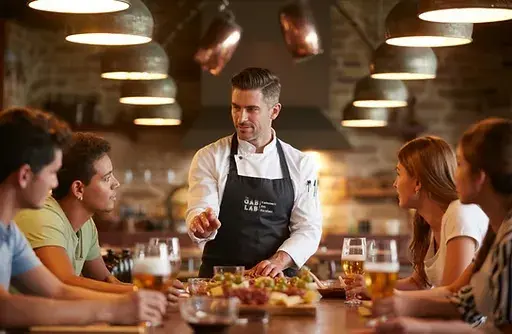
At Gastronomic Arts Barcelona (GAB LAB), chef-led cooking experiences introduce visitors to Spanish culinary traditions through hands-on participation.
Depending on the experience selected, guests can explore ingredients, prepare paella with guidance, enjoy Spanish food, and learn about Barcelona's local market culture.
This practical approach helps connect the finished dish to the decisions made during cooking.
For travelers who want to develop their cooking skills, explore our Paella Cooking Class in Barcelona.
You can also discover the Ultimate Paella Cooking Class Experience, which brings cooking and market exploration together.
What Should You Look for in a Paella Cooking Experience?
A worthwhile class should help participants understand:
The origins of paella and the differences between regional styles.
Which ingredients are used and why.
How to select suitable rice.
How to manage the pan and heat.
When to add ingredients.
Why stirring techniques differ from other rice dishes.
How to identify properly cooked rice and socarrat.
How paella fits into Spanish food culture.
It is also useful to check whether the experience is hands-on, what food and drinks are included, how long the activity lasts, and whether dietary requirements can be accommodated.
Frequently Asked Questions About Authentic Spanish Paella
What is authentic Spanish paella made of?
Traditional Valencian paella is generally made with rice, chicken, rabbit, green beans, garrofó beans, tomato, olive oil, saffron, paprika, water, and salt. Regional variations may include additional ingredients such as snails or rosemary.
Is authentic Spanish paella made with chicken or seafood?
The original Valencian preparation traditionally uses chicken and rabbit. Seafood paella is a separate Spanish variation. Both can be well-prepared dishes, but they should not be described as the same traditional recipe.
What type of rice is best for authentic paella?
Spanish rice varieties such as Bomba, Senia, and Albufera are excellent choices. Their cooking characteristics differ, so liquid quantities and timing should be adjusted to the selected rice.
Do Spanish people stir paella while it cooks?
The ingredients are stirred during preparation, but the rice is generally not stirred repeatedly once distributed for the main cooking stage. This helps achieve the desired texture.
What is the difference between authentic paella and tourist paella?
Authenticity depends on accurate ingredients, appropriate cooking methods, and honest identification of the style being served. Tourist-oriented versions sometimes prioritize convenience or presentation, but being served in a tourist area does not automatically make a paella inauthentic.
Can you make authentic Spanish paella without a wood fire?
Yes. A wood fire is part of the traditional cooking heritage, but a suitable burner or stove can also be used. Even heat distribution, proper rice selection, and careful technique are essential.
Is Barcelona a good place to learn how to make paella?
Yes. Barcelona offers hands-on Spanish cooking experiences and opportunities to explore Mediterranean ingredients and food culture. A good class should also explain that the original Valencian paella tradition comes from Valencia.
Authenticity Begins With Understanding
Authentic Spanish paella is not defined by how many ingredients are placed on top of the rice or how brightly colored the finished dish appears.
Its identity begins with Valencia, where local ingredients, rice cultivation, practical cooking techniques, and shared meals shaped a lasting culinary tradition.
Understanding the differences between Valencian paella, seafood paella, and other regional variations makes it easier to appreciate each dish on its own terms.
And while reading about cooking techniques can teach you a great deal, preparing the dish yourself offers a different kind of understanding.
At Gastronomic Arts Barcelona, visitors can discover Spanish culinary traditions through interactive, chef-led experiences in the heart of Barcelona.
Ready to take your knowledge from reading to cooking? Explore our Barcelona Paella Cooking Experience and find a class that suits your visit.
What would you most like to learn first—the traditional ingredients, the perfect rice texture, or the technique behind socarrat?


Comments