
5 Essential Tips for Making Authentic Spanish Paella at Home

You have invited friends over for dinner and decided to prepare something special. Instead of making another pasta dish or ordinary rice meal, you want to bring a little Spanish food culture to your table. You choose paella.
You have the rice, seafood, vegetables, olive oil, and saffron ready. But as you start cooking, a few questions come up. Should you wash the rice? How much stock should you use? When should you add the seafood? And how do you get that slightly toasted layer at the bottom without burning the dish?
These small details can make a big difference.
Paella may look simple, but good results depend on choosing suitable ingredients, understanding the cooking process, and controlling the heat. A little knowledge can help you avoid common mistakes and prepare a dish with better flavour and texture.
Whether you are a beginner or someone who enjoys exploring Spanish cuisine, these five practical tips will help you understand paella recipes and prepare a more authentic Spanish-style rice dish at home.
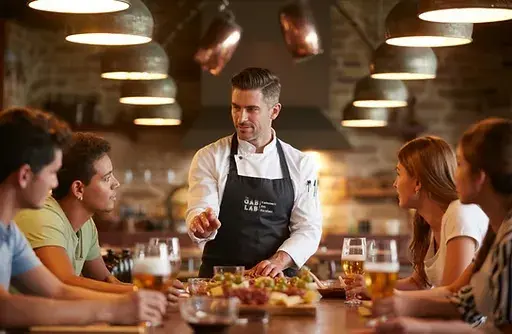
If you want to go beyond home cooking, Gastronomic Arts Barcelona (GAB Lab) also offers interactive culinary experiences where visitors can explore Spanish food traditions with chefs.
What Makes Traditional Spanish Paella Different?
Paella originated in Valencia, on Spain's eastern coast. It developed as a rice dish prepared with locally available ingredients and cooked in a wide, shallow pan.
Today, several regional styles exist. Valencian paella traditionally uses ingredients such as rice, chicken, rabbit, green beans, and saffron. Seafood versions are also popular, especially in coastal areas.
Although ingredients can vary, several cooking principles remain important.
Rice: The foundation of the dish and the main ingredient responsible for its texture.
Stock: Provides moisture and carries flavour into the rice.
Sofrito: A cooked base of ingredients, often including tomato, garlic, and other seasonings.
Saffron: Adds its distinctive aroma and colour.
Cooking Pan: A wide, shallow pan helps spread the rice in a relatively thin layer.
Socarrat: The lightly toasted rice layer that can develop at the bottom of the pan.
Understanding these elements helps explain why paella is different from ordinary boiled rice or risotto.
5 Expert Tips for Better Spanish Paella
1. Choose the Right Rice Before You Start Cooking
One of the most important decisions happens before you turn on the stove: choosing the rice.
Not all rice varieties behave in the same way. Some absorb more liquid, while others release more starch and can become sticky. Using an unsuitable variety may change the texture even if the rest of your ingredients are excellent.
For traditional Spanish paella, two well-known options are Bomba and Calasparra rice.
Bomba Rice
Bomba is a Spanish short-grain variety valued for its ability to absorb flavourful liquid while maintaining its shape when cooked correctly. It is particularly popular for paella.
Calasparra Rice
Calasparra rice is another Spanish variety used in traditional rice dishes. It can also produce good results when prepared according to its cooking requirements.
Practical cooking advice:
Check the rice variety before purchasing.
Read the recommended cooking instructions.
Use a recipe designed for your chosen rice.
Avoid changing rice varieties without adjusting the liquid and cooking time.
Do not assume that all short-grain rice behaves identically.
Should you wash rice before making paella?
For many traditional paella preparations, rice is added directly without rinsing. Washing can remove surface starch, but it may also remove some of the starch that contributes to the cooking liquid's texture. Follow the instructions for your specific rice and recipe.
The main lesson is simple: choose your rice first, then select a recipe designed around it.
2. Build Flavour with Fresh Ingredients and a Proper Sofrito
A good paella does not need an endless list of ingredients. What matters is how well the ingredients work together.
One important part of Spanish rice cooking is sofrito. It is a slowly cooked flavour base, commonly made with tomato, garlic, olive oil, and other ingredients depending on the regional recipe.
Cooking this base properly helps develop flavour before the rice is added.
Ingredients commonly used include:
Ingredient | Purpose |
Olive oil | Helps develop the flavour base |
Tomato | Adds body and natural sweetness |
Garlic | Provides aroma and depth |
Saffron | Adds a distinctive aroma |
Paprika | Adds colour and flavour in suitable recipes |
Stock | Carries flavour into the rice |
Seafood or meat | Provides the main protein |
Vegetables | Adds texture and flavour |
How to improve your flavour base:
Prepare and measure the ingredients before cooking.
Use a suitable amount of olive oil.
Cook the sofrito until its ingredients soften and develop flavour.
Avoid burning the garlic or spices.
Season carefully instead of adding too much salt at once.
Fresh ingredients also need proper handling. Keep seafood refrigerated until preparation, avoid cross-contamination, and cook it safely.
One common mistake is adding too many ingredients simply because they are available. A balanced combination often produces a better result than an overcrowded pan.
3. Measure the Stock and Control the Heat
Rice texture depends heavily on the relationship between liquid, temperature, and cooking time.
Too much stock can leave the rice overly soft. Too little can result in hard or undercooked grains.
There is no single liquid-to-rice ratio that works for every paella. The amount depends on the rice variety, pan dimensions, heat source, and cooking method.
Follow these steps:
Use a tested recipe designed for your rice variety.
Measure the stock before adding it.
Consider the size and shape of your pan.
Maintain an even cooking temperature.
Avoid adding extra liquid without checking the rice first.
Why is heat control important?
A very high temperature can cause the liquid to evaporate before the rice is cooked. A temperature that is too low may produce uneven cooking.
Traditional paella is often cooked over a controlled heat that can change during different stages of preparation.
For example, the initial cooking of the flavour base may require a different temperature from the final rice-cooking stage.
An important practical tip: If you are cooking on a household stove, check whether the heat reaches the full base of your pan. Some burners heat only the centre, which can cause uneven cooking. Rotating the pan carefully, where safe, may help distribute heat more evenly.
Do not rely on time alone. Observe the liquid, rice texture, and cooking process.
4. Do Not Stir the Rice Continuously
This is one of the biggest differences between preparing paella and making dishes such as risotto.
In traditional paella, the rice is generally distributed evenly in the pan and left undisturbed during the main cooking stage.
Continuous stirring can disturb the rice layer and release more starch into the cooking liquid. It also makes it harder to develop the traditional toasted layer at the bottom.
A better method:
Prepare the flavour base.
Add the stock according to your recipe.
Add and distribute the rice evenly.
Allow it to cook without unnecessary stirring.
Monitor the heat and liquid level.
Check the rice towards the end of cooking.
What Is Socarrat, and How Do You Develop It?
Socarrat is the lightly toasted layer of rice that forms at the bottom of the pan. It is valued for its deeper flavour and slightly crisp texture.
However, developing socarrat requires attention.
The rice must be almost fully cooked before you attempt the final toasting stage. If you increase the heat too early, the bottom may burn while the upper rice remains undercooked.
Tips for better sarcasm:
Use a suitable wide pan.
Keep the rice layer relatively even.
Allow the liquid to reduce according to your recipe.
Listen for gentle crackling near the end.
Stop heating if you notice a strong burning smell.
A golden, toasted layer is desirable. Black, bitter rice is a sign that the pan has overheated.
5. Choose the Correct Pan and Time Your Ingredients Properly
A suitable paella pan helps create the right cooking conditions.
Traditional paella pans are wide and shallow. Their design allows the rice to spread across the cooking surface instead of forming a deep layer.
This is important because rice in a thick layer may cook unevenly.
What should you consider when choosing a pan?
The number of people you are serving.
The amount of rice in your recipe.
The diameter of the pan.
Whether your stove can heat the entire base.
The material and heat distribution of the pan.
A common mistake is using a small pan for a large quantity of rice. It may look convenient, but the result can be uneven cooking.
When Should You Add Seafood or Other Ingredients?
Ingredient timing also matters.
Different ingredients have different cooking requirements. Delicate seafood, for example, may become tough if cooked for too long.
Follow the instructions of your chosen recipe rather than adding everything at the beginning.
Food safety is important too. Seafood should be stored correctly and cooked to a safe temperature.
Allow the Dish to Rest
Once the rice is cooked, follow your recipe's resting instructions before serving.
A short resting period can help the moisture settle and make the dish easier to serve.
Avoid covering the pan tightly if trapped steam could make the rice overly soft.
Common Paella Cooking Problems and How to Fix Them
Even experienced home cooks can encounter problems. Understanding the cause makes it easier to improve the next attempt.
Problem | Possible Cause | Practical Solution |
Mushy rice | Too much liquid or overcooking | Check measurements and cooking time |
Hard rice | Insufficient liquid or cooking | Follow the rice-specific recipe |
Burnt bottom | Excessive heat | Control the final cooking stage |
Uneven rice | Poor heat distribution | Use a suitable pan and manage heat |
Weak flavour | Poorly developed flavour base | Prepare the sofrito carefully |
Tough seafood | Overcooking | Follow ingredient-specific timing |
No socarrat | Incorrect final cooking conditions | Adjust the final stage carefully |
These problems show why good cooking is not just about following a list of ingredients. Understanding the reason behind each step makes you a more confident cook.
Why Learning Spanish Cooking Techniques in Barcelona Is Different
You can learn a lot from books, online recipes, and cooking videos. However, some techniques are easier to understand when you can see them demonstrated.
For example, it can be difficult to judge the correct heat level or recognise the texture of properly cooked rice from written instructions alone.
A practical cooking experience allows you to observe the process, ask questions, and understand how ingredients work together.
For visitors interested in Spanish food culture, this can make a trip to Barcelona even more meaningful.
Discover Gastronomic Arts Barcelona: More Than a Cooking Class
Gastronomic Arts Barcelona (GAB Lab) offers culinary experiences for people who want to explore Spanish food through hands-on activities.
Located just off La Rambla, across from Plaça Reial, GAB Lab combines cooking, local ingredients, and Spanish food traditions.
Its advertised culinary experience includes:
Guided La Boqueria Market Visit: Discover a well-known Barcelona food market and explore local ingredients.
Spanish Tapas: Enjoy another part of Spanish food culture.
Hands-On Sangria Workshop: Explore the preparation of a popular Spanish drink.
Interactive Cooking Class: Participate in a cooking experience with chefs.
Who Can Enjoy These Experiences?
GAB Lab's private group offering is presented for groups ranging from 1 to 60 people.
This makes its experiences relevant to different occasions:
Friends looking for a shared activity during their Barcelona trip.
Families interested in discovering Spanish food.
Birthday groups planning something different.
Student groups exploring local culture.
Corporate teams looking for interactive team-building activities.
Incentive travel groups planning a shared culinary experience.
GAB Lab also highlights corporate team-building workshops built around cooking, collaboration, and connection.
If you are organising a business event, explore its Corporate Team Building Workshops.
Why Consider GAB Lab?
Its location near La Rambla and Plaça Reial makes it convenient for visitors exploring central Barcelona.
Its combination of market visits, tapas, sangria, and interactive cooking also gives visitors a broader experience than simply attending a single cooking demonstration.
GAB Lab displays Tripadvisor and Viator recognition on its website, offering additional information for people comparing local culinary experiences.
If you want to discover its available experiences or discuss a private group booking, visit Gastronomic Arts Barcelona.
Frequently Asked Questions
1. What rice is best for traditional Spanish paella?
Bomba and Calasparra are popular Spanish rice varieties used in traditional paella. Both can absorb flavourful stock while maintaining their shape when cooked correctly. Always follow the instructions for your chosen variety.
2. Can I prepare paella without saffron?
Yes. You can prepare a Spanish-style rice dish without saffron, but it will have a different aroma and flavour. Turmeric may add colour, but it does not reproduce the distinctive taste of saffron.
3. Why should I avoid stirring paella while cooking?
Traditional paella is generally cooked without continuous stirring after the rice has been distributed in the pan. This helps maintain the rice structure and allows the bottom layer to develop.
4. How can I achieve the perfect socarrat?
Start with properly cooked rice and follow a recipe that includes a final toasting stage. Use controlled heat and watch carefully to prevent burning. Socarrat should be toasted, not black or bitter.
5. Where can I learn Spanish cooking techniques in Barcelona?
Gastronomic Arts Barcelona offers interactive culinary experiences that include a guided La Boqueria Market visit, tapas, a hands-on sangria workshop, and cooking with chefs. Visit its official website to explore the available experiences.
Conclusion
Making traditional Spanish paella is about understanding how ingredients, liquid, heat, and timing work together.
Choosing suitable rice, building a good flavour base, controlling stock, avoiding unnecessary stirring, and using the right pan can help you achieve better results.
The most useful cooking skill is not simply memorising a recipe. It is understanding why each step matters and learning how to recognise when something needs attention.
If you want to explore these ideas beyond your home kitchen, Gastronomic Arts Barcelona offers an opportunity to discover Spanish ingredients and food traditions through interactive culinary experiences.
Ready to explore Spanish food culture in Barcelona? Why not discover a hands-on culinary experience at GAB Lab during your next visit?


Comments