
Spanish Cooking Class vs Cooking Tour: Which Should You Book?
Updated: Jul 17
Quick Answer
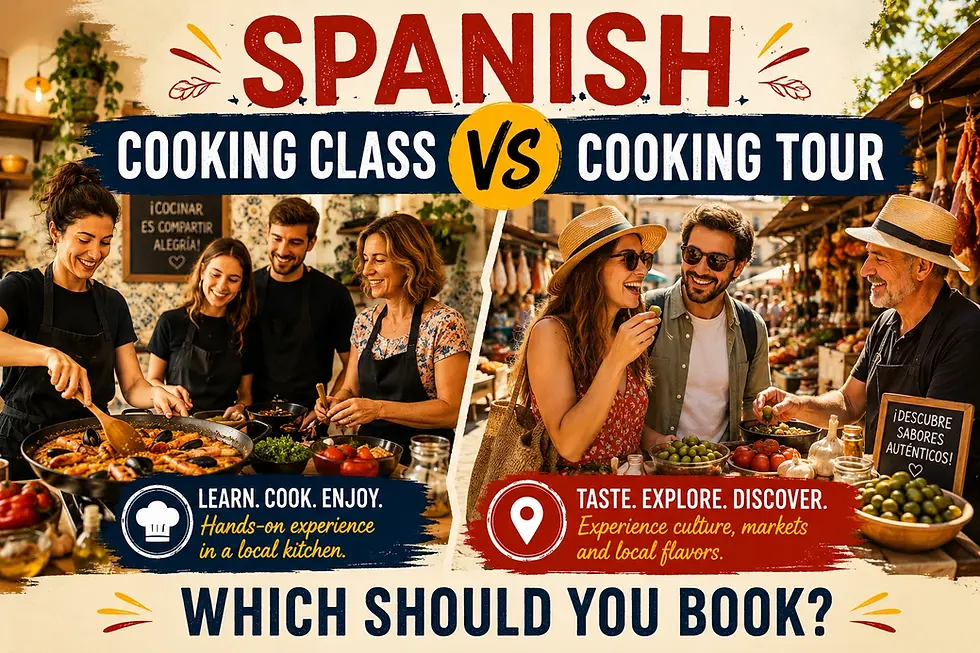
A Spanish cooking class is best if you want to learn hands-on skills, meet other travelers, and eat dishes you've prepared. A Barcelona food tour suits you if you prefer walking through neighborhoods, tasting prepared food, learning history, and covering more ground. Many travelers choose the Ultimate Paella Cooking Class because it creates lasting memories and gives you recipes to use at home. Food tours work better if you have limited time or want a quick introduction to local flavors.
Spanish Cooking Class vs Cooking Tour at a Glance
Feature | Cooking Class | Food Tour |
Time | 3–4 hours | 2–3 hours |
Price | €85–€150 | €60–€120 |
Food | You prepare and eat dishes | Tastings at multiple locations |
Drinks | Unlimited homemade sangria | Wine and drinks included |
Learning | Hands-on cooking skills | Food history and stories |
Walking | Market + kitchen | Extensive neighborhood walking |
Group Size | Small groups (8–16 people) | Small groups (6–12 people) |
Best For | Couples, families, skill-building | Quick introductions, walking lovers |
What Is a Spanish Cooking Class?
A Spanish cooking class is a hands-on culinary workshop where you prepare traditional dishes with a professional chef. You learn techniques, handle ingredients, and cook complete meals from start to finish. At the end, you sit down and eat everything you've made. It's interactive, educational, and culminates in a real meal together. Most classes run 3–4 hours and include a market visit to see how local chefs select fresh ingredients.
What Is a Barcelona Food Tour?
A Barcelona food tour is a guided walking experience through neighborhoods and food markets where you taste prepared dishes and specialty foods. A local guide leads you to restaurants, markets, and hidden food shops, explaining the history and traditions behind each dish. You taste multiple items at each stop, learn about Barcelona's culinary culture, and cover more ground than a cooking class. Tours usually last 2–3 hours and focus on sampling and storytelling rather than preparation.
Major Differences Between Cooking Classes and Food Tours
Learning
In a cooking class, you learn technique. You discover why Spanish chefs use short-grain best rice for paella, how to layer flavors in sofrito, and how saffron colors and flavors the dish. You practice cutting, stirring, seasoning, and timing. In a food tour, you learn context. You understand the history of Barcelona's food markets, why seafood dominates Catalan cuisine, and what each neighborhood specializes in.
Interaction
A cooking class is collaborative. You work alongside other travelers and the chef, ask questions, laugh when something goes wrong, and build memories together over a meal. A food tour is more observational. You listen to the guide's stories, taste what's presented, and interact briefly at each stop. One feels intimate; the other feels educational.
Entertainment
Cooking classes entertain through participation and surprise. You don't know exactly what will happen, so there's an element of adventure. Food tours entertain through story and discovery. The guide's knowledge and enthusiasm drive the experience, not your own effort.
Food Experience
In a cooking class, you eat a complete, satisfying meal. You finish feeling full. In a food tour, you taste samples—a few bites of jamón, a spoonful of aioli, a sip of wine. You eat less volume but experience more variety.
Price and Duration
Cooking classes run longer (3–4 hours) and cost more (€85–€150). Food tours are shorter (2–3 hours) and cheaper (€60–€120). If your budget is tight or time is limited, a food tour works better. If you want to invest in learning and creating memories, a cooking class offers better value.
Skills You Take Home
A cooking class gives you skills. You learn to cook paella or make authentic tapas. You get recipes and techniques to use at home. A food tour gives you knowledge and appreciation. You understand Barcelona's food culture but don't leave with new cooking abilities.
What Happens During a Spanish Cooking Class?
Most Barcelona cooking classes follow a similar structure. Understanding the timeline helps you decide if this fits your schedule.
Arrival and Welcome (15 minutes)
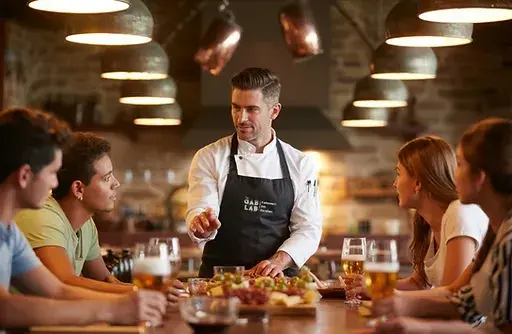
You arrive at the cooking school. You meet other participants—often travelers from different countries. The chef welcomes everyone and explains what you'll cook and learn. It's a relaxed introduction that sets a casual, friendly tone.
La Boqueria Market Visit (30–45 minutes)
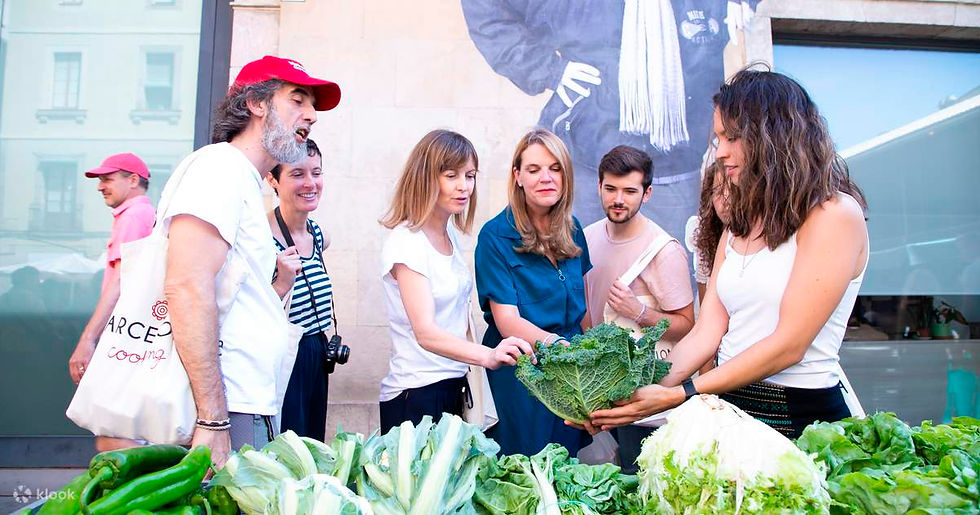
The chef takes you to La Boqueria Market, Barcelona's most famous food market. You walk past stalls of seafood, vegetables, olive oil, and saffron. The chef explains what each ingredient is, why it matters, and how to choose quality. You might buy ingredients together, or the chef purchases what you'll need. This market visit transforms ingredients from abstract items into stories. You see the tomatoes you'll use, the seafood that goes into paella, and the olive oil Barcelona cooks with.
Return to Kitchen and Sangria Workshop (20 minutes)
Back in the kitchen, you prepare homemade sangria. It sounds simple, but there's satisfaction in mixing fresh fruit, wine, and spices. While sangria chills, you taste traditional Spanish ingredients: jamón, Spanish cheese, olives. The chef explains why these are staples.
Tapas and Appetizers (30 minutes)
You prepare several small tapas dishes. You might make pan con tomate (bread rubbed with tomato and garlic), Spanish tortilla, or patatas bravas. These teach basic techniques: how to cut, how to build flavor quickly, how to balance salt and acid. Each dish feels achievable, building your confidence.
Paella Workshop (60 minutes)
This is the main event. The chef teaches you to make authentic paella—often from Valencia, paella's birthplace. You learn why bomba rice matters, how to layer flavors in sofrito, when to add seafood, and how to listen for the crispy bottom layer called socarrat. You cook together, and the kitchen fills with aromas. The chef moves between participants, offering guidance and encouragement. It's the most hands-on moment of the class.
Dining and Dessert (45 minutes)
You sit down and eat everything you've prepared. The paella, tapas, unlimited sangria. Conversation flows between new friends. The chef often joins, answering questions about Spanish food and Barcelona. Dessert is usually something light—perhaps a traditional Spanish sweet. It's the most social part of the class, where the work you did becomes a shared meal.
Recipes and Farewell (10 minutes)
As you leave, you receive printed recipes for everything you've cooked. This is valuable because you can recreate these dishes at home. The chef offers a toast, and you say goodbye to people you just met over food and learning. Many participants exchange contact information.
What Happens During a Barcelona Food Tour?
Food tours vary, but most follow a similar pattern: walking, tasting, stories, repeat.
Meeting Point and Introduction (10 minutes)
You meet your guide at a central location. The guide explains the route and what you'll taste. The tone is usually energetic and welcoming. The guide gives context for Barcelona's neighborhoods—history, architecture, food culture.
La Boqueria Market Stop (20–30 minutes)
Many food tours start at La Boqueria. You walk through the market with the guide, who points out stalls and explains seasonal produce, seafood varieties, and traditional preparations. You might sample fresh fruit or jamón at one of the market stands. The pace is quick but educational.
Bar or Restaurant Stops (30–45 minutes of walking, 60 minutes of tasting)
You walk to small bars and restaurants where the guide has relationships with owners. At each stop, you taste one or two dishes: perhaps patatas bravas at one bar, jamón serrano at another, local cheese at a third, seafood at the next. The guide explains the dish's origin, why Barcelona does it well, and how it pairs with wine or beer. You spend 10–15 minutes at each location, leaving when you've tasted and the guide is ready to move.
Hidden Neighborhood Exploration (Throughout)
Between food stops, you walk through neighborhoods—Gothic Quarter, Born, or Gràcia. The guide points out historic buildings, explains how the neighborhood has changed, and shares food stories. The walking is steady and covers significant ground. You see more of Barcelona than you would on a cooking class.
Final Stop or Dessert
Tours usually end with a sweet treat—maybe a pastry, churros, or dessert wine—and a final tasting spot. You finish feeling satisfied but not stuffed, having covered a lot of ground and tasted a lot of variety.
Which Experience Gives Better Value?
"Value" depends on what you're buying.
Price per Hour
A cooking class costs €85–€150 for 3–4 hours (about €30–€40 per hour). A food tour costs €60–€120 for 2–3 hours (about €30–€50 per hour). Per-hour costs are similar, but cooking classes include more food and unlimited sangria, while food tours include more walking and storytelling.
Food Quantity
Cooking classes win here. You eat a full meal—paella, tapas, sangria, dessert. You leave satisfied and full. Food tours include tastings and drinks but not a complete meal. You might feel hungry afterward.
Learning and Skills
Cooking classes teach practical skills you can use at home. Food tours teach you to appreciate Spanish food and Barcelona's culture. If you want to cook Spanish food later, cooking classes offer better value. If you want to understand Barcelona better, food tours win.
Time and Coverage
Food tours cover more ground and see more of Barcelona. Cooking classes are stationary after the market visit. If you want to see neighborhoods and get exercise, food tours offer more value. If you want to relax and focus deeply on one experience, cooking classes win.
Who Should Choose a Cooking Class?
A cooking class works best for:
Couples: Cooking together is fun, intimate, and creates shared memories.
Families: Kids learn that food doesn't come from nowhere. Parents get a break from restaurant planning. Everyone eats a meal they helped create.
Solo travelers: You'll automatically meet other participants. Cooking together breaks the ice faster than many social activities.
Food lovers who want to cook: If you love Spanish food and want to recreate it at home, this is your experience.
People planning to stay in Barcelona for 3+ days: You have time to dedicate 3–4 hours to an immersive experience.
Corporate groups and team-building events: Cooking together builds camaraderie and gives everyone a fun story to tell at work. Barcelona team building cooking workshops are especially effective for this.
Birthday or celebration groups: Many cooking schools offer private cooking classes for groups. It's memorable and personal.
Travelers interested in hands-on learning: If you learn better by doing than by listening, cooking classes suit you.
Who Should Choose a Food Tour?
A food tour works best for:
Travelers on short city breaks: If you're in Barcelona for 2 days, a 2–3 hour food tour fits better than a 4-hour cooking class.
History and culture enthusiasts: You'll learn about Barcelona's neighborhoods and food heritage through stories and walking.
Walking-focused travelers: If you like exploring cities on foot, food tours combine walking with eating.
First-time visitors: A food tour gives you quick, broad exposure to Barcelona's food and neighborhoods.
Travelers with limited time: Tours are shorter and can fit around other activities.
People who don't enjoy cooking: If you're not interested in preparation, tasting and learning is more fun.
Budget-conscious travelers: Food tours cost slightly less upfront, though you might spend more on additional meals later.
Groups wanting variety: You taste more dishes on a tour. If you want to try many things in one experience, this works better.
Can You Do Both?
Many Barcelona visitors do both. Here's why:
A food tour on your first day gives you context. You learn neighborhoods, meet locals, and understand Barcelona's food culture. You see where things come from—the markets, the bars, the streets.
A cooking class a day or two later goes deeper. You've now tasted authentic food, so you appreciate the ingredients more. You cook with the knowledge that this is real Barcelona food, not tourist food. The experience means more.
You might also add flamenco, a museum, or evening drinks. Food experiences in Barcelona stack well because they're different enough. You don't feel like you're doing the same thing twice.
If you have 3+ days in Barcelona, doing both is absolutely worth it. If you have 1–2 days, pick based on your priorities: cooking class for hands-on learning and immersion, food tour for walking and breadth.
Expert Tip If you enjoy learning new skills, a cooking class offers value long after your trip. You can recreate authentic Spanish recipes at home, cook for friends, and remember Barcelona every time you make paella. |
Cooking Class vs Food Tour Comparison Table
Criteria | Cooking Class | Food Tour |
Price | €85–€150 | €60–€120 |
Duration | 3–4 hours | 2–3 hours |
Food Quantity | Full meal (paella, tapas, dessert) | Tastings at multiple stops |
Drinks | Unlimited sangria | Wine and drinks at each stop |
Cooking | Hands-on (you cook) | None (you taste prepared food) |
Walking | Short walks (market + kitchen) | Extensive walking (3–5 km) |
Physical Activity | Moderate (cooking, standing) | High (walking neighborhoods) |
Interaction | High (you work together) | Medium (group walking) |
Stories and Education | Technique-focused (how to cook) | Context-focused (history and culture) |
Memories | Very strong (you created the food) | Strong (walking + tasting) |
Skills You Take Home | Cooking recipes and techniques | Knowledge of neighborhoods and food culture |
Best For Busy Travelers | No (requires 3–4 hours) | Yes (fits in tight schedules) |
Why Many Travelers Prefer Cooking Classes
Several reasons explain why cooking classes often rank higher in Barcelona visitor reviews.
Cooking Creates Strong Memories
When you cook, you're actively involved in the experience. Your hands are moving, your senses are engaged, and you're working toward a goal. The meal at the end tastes better because you made it. Years later, you'll remember not just the taste but the smell of the kitchen, the chef's laughter when someone fumbled with the paella pan, and the faces of people you met while cooking.
Meeting Other Travelers
Cooking classes create natural connection. You're working together toward a shared meal. Strangers become friends over sangria and paella. Many travelers stay in touch after. The shared experience—the minor failures, the successes, the meal together—bonds people faster than walking and tasting.
Learning Real Skills
You come home with skills. You can make paella, authentic tapas, homemade sangria. These aren't just Barcelona memories—they become part of your life. You cook these dishes for friends and family. You tell the story of learning from a Barcelona chef. The experience extends beyond your trip.
Eating Together Matters
Food tours include tasting, but cooking classes include a real meal. You sit down with other participants, unlimited sangria, dessert, recipes. It's social and satisfying. You feel full, happy, and connected. The meal is the payoff for your work.
Local Insight Many Barcelona cooking classes begin with a visit to La Boqueria Market. Seeing local chefs select seafood, vegetables, olive oil, and saffron gives you a better understanding of Spanish cuisine than simply tasting prepared dishes. You realize that great food starts with great ingredients and knowledge of how to choose them. |
Expert Tips Before Booking
Before you commit to either experience, consider these practical details.
Book Early
Both cooking classes and food tours fill up during peak season (April–October). If you're visiting in summer, book 2–3 weeks in advance. If you're flexible on dates, you'll have more options.
Morning or Afternoon?
Most Barcelona cooking classes run in the morning or afternoon. Morning classes let you eat lunch and still have your evening free. Afternoon classes finish around 6 or 7 PM, leaving you time for an evening aperitivo with new friends. Choose based on your travel schedule.
Private vs Group
Both experiences offer group and private options. Group classes cost less and offer more social connection. Private classes cost more but let you customize the experience and move at your pace. For couples or families, private classes often feel worth the extra cost.
Dietary Restrictions
Most cooking schools and tour operators accommodate vegetarian, vegan, and allergy needs if you mention them when booking. Don't skip this step. Spanish cuisine includes many vegetable-based dishes, but the chef needs to know your needs in advance.
What to Wear
Wear comfortable, casual clothing. Cooking classes have you standing and moving, so comfortable shoes help. Avoid loose sleeves that could dip into food. Bring an apron (often provided) or wear something you don't mind getting oil on. For food tours, wear walking shoes and layers because Barcelona's weather changes.
Camera and Photos
Both experiences are Instagram-worthy. Bring a phone or camera. The chef often doesn't mind you photographing food. For food tours, the guide expects photos at each stop. For cooking classes, the best moment is the final meal—get that photo.
Frequently Asked Questions
Is a cooking class worth it?
Yes, if you want more than just tasting food. Cooking classes offer hands-on learning, social connection, and a lasting memory. You eat a complete meal and leave with recipes. The €85–€150 cost includes food, drinks, instruction, and ingredients. Compare that to a restaurant dinner, which might cost €40–€60 for less food and no learning. The cost is reasonable for what you get.
Are food tours cheaper?
Slightly. Food tours cost €60–€120 compared to €85–€150 for cooking classes. However, food tours include tastings, not a full meal. You might feel hungry afterward and spend extra on dinner. Cooking classes include a complete meal, so your food costs are covered. The price difference isn't dramatic.
Do cooking classes include drinks?
Yes. Spanish cooking classes typically include unlimited homemade sangria or wine. Most food tours include drinks at each stop—wine, beer, or Spanish vermouth. Both experiences pair food with drinks, which is part of the Spanish dining culture.
Can beginners join cooking classes?
Absolutely. Most Barcelona cooking classes are designed for beginners with no prior cooking experience. The chef explains every step, you cook alongside others, and there's no judgment. Even if you've never cooked before, you'll successfully make paella and tapas. The class moves at the group's pace, and the chef adjusts difficulty based on the group.
Do cooking classes include market tours?
Most do. La Boqueria Market is Barcelona's most famous food market, and many cooking schools include a market visit so you see ingredients and learn how local chefs select them. The market visit lasts 30–45 minutes and is part of the class, not an add-on. Some smaller cooking schools might skip the market and have pre-purchased ingredients, but that's less common.
Is paella difficult to cook?
No, but it has rules. The difficulty isn't in understanding what to do—it's in timing and heat control. The chef teaches you the rules, you practice together, and the chef is there if you struggle. Most people make excellent paella in a cooking class on their first try. At home, your second and third attempts will be even better. Paella looks more intimidating than it actually is.
Which is better for families?
Cooking classes edge out food tours for families. Kids enjoy the hands-on activity and eating what they cooked. The experience is interactive rather than passive. Food tours involve a lot of walking, which some children find tiring. However, both can work for families depending on kids' ages and interests. Older kids (10+) usually enjoy food tours.
Which is better for couples?
Cooking classes create more romantic memories. Cooking together, learning from a chef, and sharing a meal with wine is intimate and personal. Food tours feel more social and touristy. For couples wanting a memorable, intimate experience, cooking classes win. You might also book a premium paella masterclass to enhance the romance.
Can solo travelers join?
Yes, and solo travelers often love cooking classes. You automatically meet other participants, and cooking together breaks social barriers. You'll likely make friends. Food tours also welcome solos, but the social connection is less intense because you're mainly walking and listening. For solo travelers wanting to meet people, cooking classes are better.
How much should I budget?
For a cooking class: €85–€150 per person. For a food tour: €60–€120 per person. Both include food and drinks. If you're doing both, budget €160–€270 total for both experiences plus meals. Remember that Barcelona is relatively affordable compared to other European capitals. These experiences are good value because they replace restaurant meals and offer education.
Final Verdict: Which Should You Choose?
There's no single right answer. Both experiences are excellent. The choice depends on your travel style, time, and what you want from Barcelona.
Choose a cooking class if:
You want to learn a skill you'll use after your trip.
You have 3–4 hours to dedicate to one immersive experience.
You prefer intimate, collaborative activities over walking tours.
You travel with a partner or family and want a shared activity.
You want strong, lasting memories and connections with other travelers.
You're willing to invest €85–€150 for a complete, memorable experience.
Choose a food tour if:
You're on a tight schedule and have only 2–3 hours.
You want to see more of Barcelona's neighborhoods.
You prefer sampling many dishes over learning to cook one.
You're visiting Barcelona for the first time and want broad exposure to food and culture.
You enjoy walking and exploring at your own pace.
Budget is a priority (food tours are slightly cheaper).
Or do both if:
You're in Barcelona for 3+ days.
You want broad exposure (tour) and deep learning (class).
You want to maximize food experiences without repetition.
Your budget allows €160–€270 for both experiences.
The best Barcelona cooking classes combine a market visit, hands-on preparation, professional instruction, and a shared meal. They attract travelers from dozens of countries and consistently earn five-star reviews because they deliver a genuine, unrushed experience. Food tours excel at showing you Barcelona quickly and contexting what you eat within the city's culture.
Whichever you choose, you'll eat well and connect with Barcelona. The experience creates memories that last long after you leave. Either way, you'll return home with stories about Spanish food, new friends, and a better understanding of Barcelona's culinary culture.
Barcelona's food experiences aren't just about eating—they're about learning, connecting, and creating memories in one of Europe's most vibrant cities.



Comments