
What Is a Barcelona Paella Experience?
Updated: Jul 17

Paella is more than a dish. It's a ritual. When you book a Barcelona paella experience, you're not signing up for a cooking lesson. You're stepping into a tradition that stretches back centuries.
A Barcelona paella experience is a hands-on culinary activity where you learn to cook authentic Spanish paella with professional chefs. The experience typically includes a guided market tour at La Boqueria, ingredient selection, a sangria or tapas workshop, and interactive cooking in a professional kitchen. You finish by sharing your meal with other participants or your private group.
This guide explains everything you need to know about this popular Barcelona food experience, from what happens during the class to who teaches it, pricing, and whether it's right for you.
Why Is It One of Barcelona's Most Popular Food Experiences?
Barcelona attracts two million visitors annually. Many come for Sagrada Familia or Park Güell. But travelers increasingly search for authentic food experiences rather than sightseeing tours.
The Barcelona paella experience fills this gap. Here's why it's popular:
It's hands-on. You cook the paella yourself, not just watch someone else make it.
It's cultural. You learn Spanish culinary traditions directly from local chefs, not from a guidebook.
It's practical. You walk away knowing how to recreate paella at home with proper techniques.
It's affordable. Compared to fine dining, a paella cooking class costs less but feels more memorable.
It's Instagram-worthy. You get professional photos of your finished dish, your cooking station, and the market visit.
It includes multiple components. Market tour, workshop, cooking class, and a meal all in one experience.
Barcelona's position as a Mediterranean food hub makes paella particularly relevant here. While paella originated in Valencia, Barcelona has become the top destination for travelers seeking to learn authentic cooking techniques from Spanish chefs.
What Happens During a Barcelona Paella Experience?
Understanding the timeline helps you decide if this experience fits your schedule.
The Market Visit
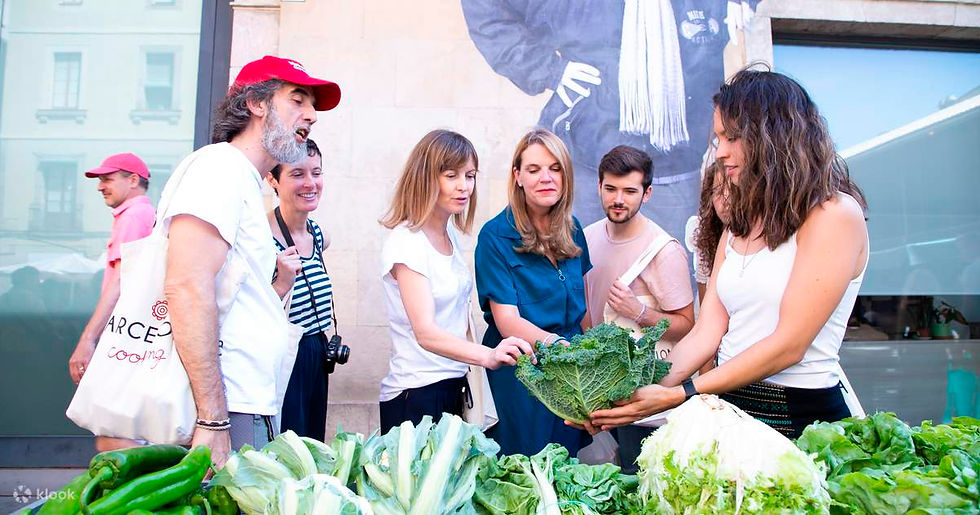
Most Barcelona paella experiences begin at La Boqueria Market, one of Europe's oldest markets. Your chef guides you through hundreds of produce stalls, fish vendors, and specialty shops. You learn to identify quality ingredients for paella.
Your guide explains the importance of fresh, seasonal vegetables. They show you bomba rice varieties, explain saffron grades, and point out the difference between wild-caught seafood and farmed options. This typically takes 60 to 90 minutes.
You'll understand why local chefs refuse to use pre-packaged ingredients. Visiting the market teaches you that paella's authenticity depends on what you buy and who grows it.
Ingredient Selection
After touring, you select your paella ingredients. Your chef helps you choose based on the day's availability and seasonality. This isn't random shopping. You're learning the decision-making process that Spanish chefs use daily.
You might select fresh prawns, mussels, squid, tomatoes, green beans, bell peppers, and garlic. Or you might choose a vegetarian paella with seasonal vegetables. Your chef adapts based on your preferences and dietary needs.
The Sangria and Tapas Workshop
Before cooking, many classes include a sangria tasting or workshop. You learn how to blend wine, fruit, and spices to create a refreshing drink that pairs perfectly with paella.
Some experiences include a tapas workshop where you prepare small bites like patatas bravas, Spanish meatballs, or Catalan bread with tomato and olive oil. These become appetizers you eat before the main course.
Hands-On Cooking
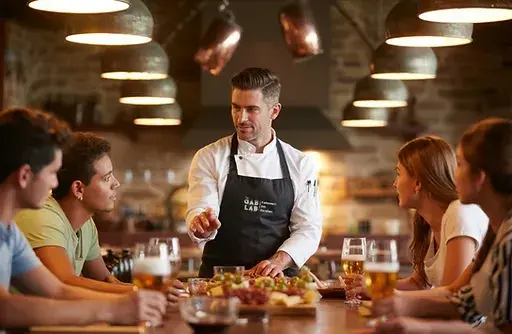
This is the centerpiece of the Barcelona paella experience. You enter a teaching kitchen equipped with individual burners and paella pans. Your chef demonstrates the proper technique, then you cook alongside them.
Paella cooking involves several stages:
First, you heat olive oil in the paella pan and sauté the onions and garlic until soft.
Next, you add the rice and toast it lightly. This step, called "toasting," develops the rice's flavor.
Then you add the sofrito, a slow-cooked mixture of tomatoes and peppers that gives paella its distinctive color and taste.
You gradually add hot stock (vegetable, chicken, or seafood depending on your paella type) while stirring occasionally. This typically takes 15 to 20 minutes.
Finally, you create the socarrat, the crispy, caramelized layer at the bottom of the pan. This technique requires attention and timing but transforms paella from good to exceptional.
Your chef watches closely, offering tips on heat adjustment, stock temperature, and timing. They explain the difference between mushy rice and properly cooked bomba rice.
Dining Together
Once cooked, you transfer the paella to serving dishes and sit down to eat. You share your meal with other participants or enjoy it with your private group.
This final step completes the cultural experience. In Spain, meals are social events. The Barcelona paella experience ends not at the cooking stage but when you gather to eat together, share stories, and celebrate your accomplishment.
The History of Paella
Paella didn't originate in Barcelona. It comes from Valencia, a coastal region south of Barcelona. Understanding this history gives you perspective on what you're learning in a Barcelona paella experience.
Paella emerged in the 15th century in the flat marshlands around Valencia. Workers in these wetlands needed filling meals they could cook outdoors. They combined local rice, seasonal vegetables, and whatever protein was available.
The dish's name comes from the "paellera," the wide, shallow pan used for cooking. Paella literally means "pan" in Valencian.
Over centuries, paella evolved from peasant food to a celebrated dish across Spain. By the 20th century, it became Spain's most famous culinary export.
Barcelona adopted paella enthusiastically, though traditionally it's more associated with Valencia. Today, Barcelona offers more paella cooking classes than Valencia, making it the de facto center for tourists learning paella techniques.
The Barcelona paella experience exists because modern travelers want to connect with Spanish food culture. It's a bridge between traditional cooking methods and contemporary tourism.
Why Authentic Ingredients Matter
You can find paella anywhere now. Hotels serve it across Europe. But authentic Barcelona paella depends on specific ingredients that produce the correct flavor, texture, and appearance.
Bomba Rice {#bomba-rice}
Bomba rice is the only rice suitable for paella. It's short-grain, starchy, and absorbs liquid without becoming mushy. Bomba rice maintains its shape even after 20 minutes of cooking with hot liquid.
Other rice varieties break down or become gluey. Arborio risotto rice, for example, releases starch that creates a creamy texture unsuitable for paella.
Bomba rice costs more than standard white rice, but it's essential. When you take a Barcelona paella experience, your chef insists on bomba rice because the cooking technique assumes this specific grain.
Saffron
Saffron is the stigma of the Crocus sativus flower. Each flower produces three tiny stigmas. You need thousands of flowers to produce one pound of saffron.
This scarcity makes saffron expensive, sometimes more costly than gold by weight. A Barcelona paella experience uses real saffron, not turmeric, which some restaurants substitute to reduce costs.
Saffron provides paella's distinctive golden color and subtle floral, slightly earthy flavor. It's not an optional ingredient. It's fundamental to authentic paella.
Your chef explains how to identify quality saffron. Real saffron threads are dark red, thin, and fragrant. Cheap saffron is orange, uniform, and nearly odorless. During your Barcelona paella experience, you'll see the difference firsthand.
Olive Oil
Spanish olive oil, particularly from Andalusia or Catalonia, defines the cooking base for paella. Extra virgin olive oil has a lower smoke point than refined oil, but Spanish chefs use it regardless because the flavor matters more than the smoke point.
Your chef demonstrates how to heat olive oil until it shimmers, then shows you how hot it should be before adding garlic and onions. This technique can't be taught with neutral-flavored oil.
Sofrito
Sofrito is a slow-cooked base of tomatoes, onions, peppers, and garlic. Making authentic sofrito takes time. You simmer the vegetables for 30 to 45 minutes until they break down into a concentrated paste.
Many home cooks skip sofrito and use crushed tomatoes instead. This shortcut produces a thinner, less flavorful paella. Your Barcelona paella experience teaches you why sofrito matters and how to make it properly.
Seafood and Seasonal Vegetables
Barcelona's proximity to the Mediterranean means access to fresh seafood. Your chef selects mussels, prawns, squid, and fish based on the day's catch.
Seasonal vegetables also matter. Spring paella might include artichokes and fava beans. Summer paella uses bell peppers and tomatoes. Fall and winter versions feature green beans and seasonal mushrooms.
Your guide at La Boqueria Market teaches you which vegetables are in season, why seasonal ingredients taste better, and how to select produce at peak ripeness.
Meet the Professional Chefs
The quality of a Barcelona paella experience depends entirely on who teaches it.
Gastronomic Arts Barcelona employs professional chefs with 10+ years of cooking experience. Many trained in Michelin-starred kitchens. Some grew up in families with multi-generational cooking traditions.
Your chef brings expertise in Spanish culinary techniques, ingredient selection, and teaching. They've cooked paella hundreds of times. They know how to adjust for altitude, humidity, and individual cooking equipment variations.
More importantly, they understand how to teach. Cooking classes fail when instructors focus on their own technique rather than helping students learn. Gastronomic Arts Barcelona's chefs balance demonstration with hands-on guidance, allowing you to develop real skills rather than simply watching an expert perform.
Your chef also shares local knowledge. They explain Barcelona's food culture, point out restaurants worth visiting, discuss seasonal ingredients, and answer questions about Spanish cuisine beyond paella.
What You'll Learn
A Barcelona paella experience teaches specific skills:
How to prepare ingredients properly. Your chef shows you how to clean mussels, peel prawns, cut vegetables to consistent sizes, and prepare stock.
How to time multiple components. Paella requires managing heat, ingredient timing, and rice doneness simultaneously. You learn to coordinate these elements so everything finishes together.
How to develop flavor through technique. You discover why toasting rice matters, how sofrito develops flavor, and why saffron should bloom in warm liquid before adding to the pan.
How to recognize proper doneness. Bomba rice should be cooked through but firm. You learn to taste and assess rather than relying on timers.
How to create the socarrat. This crispy bottom layer intimidates many home cooks. Your chef demystifies the technique by showing you the proper heat level, pan tilt, and timing.
How to adapt paella to available ingredients. Your chef teaches underlying principles so you can make paella with whatever quality ingredients you can find at home.
How Spanish food culture differs from other cuisines. You understand why Spanish cooking emphasizes simplicity, quality ingredients, and technique over complex flavor combinations.
Who Should Join?
The Barcelona paella experience works for different types of travelers.
Food enthusiasts who cook regularly benefit from learning authentic Spanish techniques they can't find in cookbooks.
Travelers planning extended stays in Spain gain practical skills and cultural understanding that enhance their trip.
Groups and families enjoy the social aspect of cooking and eating together. It's more engaging than a traditional restaurant meal.
Complete beginners participate successfully because your chef adjusts instruction to match skill levels. You don't need prior cooking knowledge.
Dietary restrictionists (vegetarians, allergic to shellfish, etc.) find accommodating chefs who adapt recipes while teaching the same techniques.
Solo travelers appreciate meeting other participants during the market visit and cooking session. Many people book alone and form friendships during the experience.
Corporate groups use paella workshops for team building. Cooking together requires communication and collaboration.
The Barcelona paella experience isn't exclusive. It's designed for anyone curious about Spanish food and interested in cooking something meaningful. If you prefer other culinary activities, we also offer baking workshops and tapas experiences.
Public vs Private Paella Experience
Aspect | Public Class | Private Experience |
Group Size | 8-12 people | 4-15 people (your group) |
Cost Per Person | €85-120 | €150-300 (total price divided) |
Scheduling Flexibility | Fixed times (daily) | Choose your date and time |
Instruction Level | General pace | Customized to your skill level |
Market Tour | Shared with other participants | Just your group |
Cooking Stations | Shared or individual burners | Individual burners per couple |
Menu Flexibility | Set menu | Choose your paella type |
Photography Time | Limited | Extensive |
Dietary Customization | Limited | Full customization |
Private Chef | No (rotating instructors) | Yes (same chef throughout) |
Transportation | Included in many classes | Optional (add-on) |
Best For | Individual travelers, meeting people | Families, groups, special occasions |
How Much Does a Barcelona Paella Experience Cost?
Experience Type | Price Per Person | What's Included | Booking |
Standard Class | €95-120 | Market tour, cooking, meal | 4 hours |
€150-180 | Market tour, multiple dishes, wine pairing | 5 hours | |
Private Group (4 people) | €280-380 total (€70-95 per person) | Everything in standard + customization | 4 hours |
Private Group (8 people) | €640-800 total (€80-100 per person) | Market tour, cooking, tapas, sangria | 5 hours |
€450-600 (4-6 people) | Extended market tour, cooking competition, team meal | 5 hours | |
Luxury Experience | €200-250 per person | Michelin chef instruction, wine pairing, premium ingredients | 6 hours |
To book any experience, visit our online reservation system or contact Gastronomic Arts Barcelona directly.
Prices vary seasonally. Summer classes cost more than winter classes. Holiday periods (Christmas, Easter) command premium prices.
What's typically included:
Professional chef instruction
La Boqueria Market guided tour
All paella ingredients
Paella pan and cooking equipment
Sangria or beverage
Your cooked meal
WiFi (photography sharing)
Recipes to take home
Professional photos
What's not included:
Transportation to the kitchen
Wine beyond sangria/cava
Dietary supplement foods (nuts, specialized ingredients)
Cooking equipment (you can't take the paella pan home)
Why La Boqueria Market Is Part of the Experience
La Boqueria Market has operated since 1826. It's not a tourist trap. Local chefs, restaurant owners, and home cooks shop here daily.
The market occupies nearly 2,000 square meters. It has over 200 vendors selling produce, meat, fish, spices, and specialty foods. On any given day, you'll see locals selecting ingredients for dinner alongside tourists learning about Spanish food.
Your Barcelona paella experience includes La Boqueria because:
You see where professionals source ingredients. Chefs aren't being romantic about "fresh, local ingredients." They're being practical. Market vendors sell produce picked that morning. Quality is measurably better than supermarket produce picked days earlier.
You learn to identify quality. Your chef shows you how to select ripe tomatoes, fresh fish, and premium saffron. This knowledge transfers home. You'll shop differently after understanding what professional cooks look for.
You experience Barcelona's food culture. Markets are where food culture lives. Supermarkets are efficient but sterile. Markets are social spaces where people gather, chat, and build relationships with vendors over years.
You understand seasonality. The market shows you what's actually available right now. You can't buy strawberries in December at La Boqueria like you can at a supermarket. This teaches you to cook with seasons rather than against them.
Your chef knows vendors personally. They introduce you, explain which stalls specialize in what, and show you their preferred sources for specific ingredients.
Tips Before You Book
Choose between public and private based on your preferences. If you want to meet other travelers and don't mind a set schedule, public classes work well. If you're celebrating something special or prefer customization, private experiences deliver better value.
Book at least two weeks in advance. Cooking classes fill up, especially in summer. Early booking ensures your preferred dates are available.
Wear comfortable shoes. La Boqueria involves standing and walking. Your market tour lasts 60-90 minutes. Comfortable footwear matters more than fashionable shoes.
Avoid large jewelry or loose clothing. These can catch on cooking equipment or dip into sauces. Wear fitted clothes, tie back hair, and remove dangling bracelets.
Eat a light breakfast if your class starts mid-morning. You'll eat a full paella meal during the class. A light breakfast prevents overeating without making you hungry during cooking.
Bring a small bag for market purchases. Many people buy extra ingredients or spices at La Boqueria to take home. A reusable shopping bag fits easily in a backpack or purse.
Plan to stay in Barcelona at least one full day. A Barcelona paella experience typically runs 4-5 hours. You'll want time for other activities, meals, or rest before and after.
Ask about dietary requirements when booking. Vegetarian, vegan, gluten-free, and allergy-friendly adaptations work well. Your chef adjusts recipes without compromising quality.
Request your chef's recommendations for follow-up restaurants. After learning from your chef, ask where they eat personally. Restaurant recommendations from professional cooks beat guidebook suggestions.
Common Mistakes Travelers Make
Booking a class too early in their trip. If you book a class on day one and spend the next four days thinking about it, you haven't maximized the experience. Book during your second or third week so you've already understood Barcelona's food culture.
Skipping the market tour. Some people book only the cooking class without the market component. This misses the educational foundation. The market explains why paella works the way it does.
Not reviewing paella varieties before booking. Some people assume all paella is seafood-based. Traditional vegetable and meat versions exist. Understand what paella type interests you before booking.
Bringing too many expectations. Your paella will taste good but probably not restaurant-level. You're learning in a few hours what professionals spent years mastering. Appreciate the learning rather than comparing your result to professional output.
Forgetting to ask questions. Your chef wants you to understand. Don't hesitate asking why steps happen in a specific order, how you'd adapt recipes, or about other Spanish dishes you're curious about.
Not getting the recipe in writing. Make sure you leave with detailed recipes you can follow at home. If these aren't provided, ask for them.
Expecting to take everything home. You can't take the paella pan, cooking equipment, or leftover ingredients. You get recipes and photos. Plan accordingly.
Frequently Asked Questions
What is a Barcelona paella experience?
A Barcelona paella experience is a hands-on cooking class where you learn to prepare authentic Spanish paella from professional chefs. The experience includes a guided tour of La Boqueria Market, ingredient selection, often a sangria or tapas workshop, and interactive cooking in a professional teaching kitchen.
You cook the paella yourself under chef guidance, then share your meal with other participants or your private group. It typically lasts 4-5 hours and costs €85-250 per person depending on whether it's a public class or private group experience.
Is cooking experience required?
No. Beginners succeed in Barcelona paella experiences because chefs adjust instruction to your skill level. Your chef shows each technique step-by-step and watches as you practice.
If you've never cooked before, choose a public class to learn from observing more experienced participants. If you prefer instruction tailored to beginners only, book a private experience.
How long is the class?
Standard paella classes run 4 hours. This includes the La Boqueria Market tour (60-90 minutes), ingredient preparation (30 minutes), cooking (45-60 minutes), and dining (30-45 minutes). Premium experiences and private groups sometimes extend to 5 or 6 hours, adding sangria workshops, tapas preparation, or wine pairings.
Is the market visit included?
Most Barcelona paella experiences include a guided La Boqueria Market tour. Confirm this when booking because some classes focus only on cooking without the market component. The market tour is valuable because it teaches ingredient selection and Barcelona's food culture. If the market is optional, we recommend including it.
Can vegetarians join?
Yes. Vegetarian paella exists and is equally authentic as seafood versions. Your chef prepares paella with seasonal vegetables, artichokes, fava beans, mushrooms, and other plant-based ingredients. The cooking technique remains identical. Some classes require pre-booking vegetarian options, so mention this when reserving.
What should I wear?
Wear comfortable, closed-toe shoes suitable for standing and walking. The market tour involves movement. Choose fitted clothes that won't catch on cooking equipment. Tie back long hair. Avoid dangling jewelry. An apron is typically provided. The teaching kitchen is warm from cooking fires, so light layers work well.
What language is the class taught in?
Most Barcelona paella classes are taught in English. Some chefs speak Spanish, Catalan, French, or German. When booking, specify your preferred language. Many classes accommodate mixed language groups by using demonstrations rather than lengthy verbal explanations.
What is socarrat? {#socarrat}
Socarrat is the crispy, caramelized layer at the bottom of the paella pan. It's created in the final minutes of cooking by raising the heat and allowing the rice to toast slightly against the hot paella pan bottom. Socarrat adds flavor and texture contrast. It's a hallmark of skilled paella cooking. Your chef teaches this technique during the hands-on cooking portion.
Where does paella originate?
Paella originated in Valencia, a coastal region south of Barcelona. It emerged in the 15th century as peasant food for agricultural workers. Over centuries, it evolved into a celebrated Spanish dish. While paella is traditionally associated with Valencia, Barcelona has become the top destination for travelers learning to cook it because of abundant cooking classes and the city's position as a food tourism hub.
Is it worth taking a cooking class in Barcelona?
Yes, if you enjoy cooking, want to understand Spanish food culture, or seek memorable experiences beyond standard tourism. A Barcelona paella experience costs less than a multi-course restaurant meal but feels more meaningful because you're learning and participating. The memories, skills, and connections you make often outlast souvenir purchases. It's worth booking if this description resonates with you.
How much does it cost?
Public paella classes cost €85-120 per person. Premium classes run €150-180. Private group experiences range from €70-95 per person depending on group size (calculated from total pricing of €280-800 for groups of 4-8). Team building workshops and luxury experiences start at €450 and can exceed €250 per person. Prices vary seasonally and by provider.
Can families join?
Yes. Families with children as young as 8 participate successfully. Children participate in all portions including the market tour and cooking. Some families book private experiences to accommodate different cooking skills among family members. Ask if your provider offers children's portions or adaptations for younger participants.
Are drinks included?
Sangria or cava is typically included as the main beverage during your meal. Wine beyond this is usually an add-on, but clarify when booking. Some premium experiences include wine pairings throughout. If you have specific beverage preferences, mention them when reserving.
Can I recreate the recipe at home?
Yes. This is one reason to take the class. Your chef provides recipes you can follow. Bomba rice, saffron, and quality olive oil need to be sourced specifically, but these are available online or at specialty markets in most countries. The technique your chef teaches applies regardless of location. Many people successfully recreate paella at home using skills learned during their Barcelona experience.
Why is Bomba rice important?
Bomba rice is the only rice variety that produces authentic paella texture. It's short-grain, starchy, and absorbs liquid without becoming mushy or overcooked. Other rice types break down or release excessive starch, creating gluey texture. Bomba rice maintains its shape and slight firmness even after 20 minutes of cooking with hot stock. This specific texture defines proper paella. Your chef insists on bomba rice because the cooking technique assumes this specific grain.
Traditional vs Tourist Paella
Aspect | Traditional Paella | Tourist Paella |
Ingredient Source | Local markets, seasonal | Pre-portioned, commercial |
Rice Type | Bomba (always) | Substitutes like arborio |
Cooking Duration | 18-22 minutes | Varies (often overcooked) |
Socarrat | Intentional, controlled | Absent or accidental |
Saffron | Real threads | Often turmeric or omitted |
Sofrito | Slow-cooked, 30+ minutes | Quick tomato sauce substitution |
Stock Temperature | Hot throughout | Varies |
Seafood Quality | Fresh, specific seasonal species | Frozen or generic |
Preparation Style | Outdoor open-fire in Valencia, or professional kitchens | Restaurant batch cooking |
Purpose | Daily food or celebration | Tourism spectacle |
Types of Paella
Paella Valenciana is the original version. It contains meat (chicken, rabbit) and beans, never seafood. This surprises many tourists who assume all paella is seafood-based.
Paella de Marisco features seafood exclusively. Mussels, prawns, squid, and sometimes scallops or clams make up the protein. No meat or beans.
Paella Mixta combines meat and seafood. Chicken, rabbit, or sausage appear alongside mussels and prawns. This version balances both traditions.
Paella de Verduras is vegetarian paella made with seasonal vegetables. Artichokes, fava beans, green beans, tomatoes, and peppers are the primary components.
Arroz Negro is black paella made with squid ink. The ink colors the rice and adds a subtle briny flavor.
Arroz Rojo is red paella made without saffron, colored instead with red peppers or tomato. It's less expensive than traditional paella but has different flavor characteristics.
Experience Timeline
Time | Activity | Duration |
9:00 AM | Meeting point (typically near La Boqueria) | 15 minutes |
9:15 AM | Guided La Boqueria Market tour | 75 minutes |
10:30 AM | Ingredient selection | 30 minutes |
11:00 AM | Travel to teaching kitchen | 15 minutes |
11:15 AM | Apron up, introduction to cooking space | 10 minutes |
11:25 AM | Sangria tasting or tapas workshop | 30 minutes |
11:55 AM | Paella cooking begins | 60 minutes |
12:55 PM | Plating and final touches | 10 minutes |
1:05 PM | Dining together, sharing meal | 45 minutes |
1:50 PM | Cleanup, questions, photo time | 15 minutes |
2:05 PM | Class concludes | Recipes and photos provided |
Times vary by class. Some start earlier or later. Private experiences may extend the dining portion.
Featured Snippet Optimized Sections
What is a Barcelona paella experience?
A Barcelona paella experience is a hands-on cooking class where participants learn to prepare authentic Spanish paella under professional chef instruction. The experience includes a guided tour of La Boqueria Market, ingredient selection, cooking in a professional kitchen, and sharing your prepared paella meal. It typically lasts 4-5 hours and costs between €85-250 per person depending on whether you join a public class or book a private group experience.
Why is a Barcelona paella experience worth it?
A Barcelona paella experience is worth it because you learn practical cooking skills applicable at home, understand Spanish food culture directly from professional chefs, gain access to La Boqueria Market's ingredient selection, and share an authentic meal that you cooked yourself.
The cost is comparable to restaurant meals but offers substantially more value through education, cultural immersion, and memorable experiences with other participants or your group.
How long does a paella cooking class take?
A standard Barcelona paella cooking class takes approximately 4 hours. This includes a 75-90 minute guided La Boqueria Market tour, 30 minutes for ingredient selection, 60 minutes of hands-on paella cooking, and 45 minutes for dining.
Premium experiences or private groups sometimes extend to 5 or 6 hours by adding sangria workshops, tapas preparation, or extended market time.
Is a Barcelona paella experience suitable for beginners?
Yes, a Barcelona paella experience is suitable for complete beginners. Professional chefs adjust instruction to accommodate all skill levels. Your chef demonstrates each technique step-by-step and guides you through the cooking process.
You learn fundamental cooking skills and Spanish culinary techniques regardless of prior experience. Public classes allow you to observe more experienced cooks; private experiences offer instruction tailored exclusively to beginners.
What is included in a Barcelona paella experience?
A Barcelona paella experience includes professional chef instruction, a guided La Boqueria Market tour, all paella cooking ingredients, the paella pan and cooking equipment, sangria or beverage, your prepared paella meal, an apron and cooking tools, recipes to take home, and professional photos of your experience.
Some experiences also include a sangria workshop, tapas preparation, or wine pairings depending on the specific package selected.
WordPress Content Blocks
PRO TIP Buy your saffron at La Boqueria Market, not at the airport or tourist shops. Market vendors sell real saffron at fair prices. Airport shops charge triple for the same product. If you use the saffron at home, quality matters significantly to your paella's flavor.
EXPERT TIP Make sofrito the day before your paella cook. This slow-cooked base of tomatoes, onions, and peppers tastes better when flavors have time to meld. If you're cooking paella at home, preparing sofrito in advance simplifies your cooking day and improves your result. Learn proper sofrito technique in our paella cooking classes.
LOCAL INSIGHT Barcelona food culture values simplicity. Spanish chefs aren't trying to impress with complicated techniques or unusual ingredients. They're focused on technique, ingredient quality, and letting flavors speak for themselves. This philosophy applies whether you're eating at a Barcelona restaurant or cooking at home. Experience this firsthand during our professional cooking classes.
DID YOU KNOW? Paella pans have been used in Valencia for over 500 years. The wide, shallow design ensures even heat distribution across the rice. Modern materials vary, but the pan's shape remains unchanged because it's optimal for paella cooking. Many professional chefs prefer carbon steel or polished steel pans over non-stick varieties. During our premium masterclass, we teach you how to use traditional pans like Spanish professionals.
COMMON MISTAKE Many home cooks stir paella constantly like risotto. Paella should be stirred occasionally during the first half of cooking, then left undisturbed during the final stages. This allows the socarrat to develop. Your chef will show you the correct stirring pattern, which is essential to paella success.
Why Choose Gastronomic Arts Barcelona
Gastronomic Arts Barcelona stands apart from other cooking schools because:
Experienced Instructors. Your chef has trained in professional kitchens and brings real expertise, not just cooking ability. Learn from the best paella instructors in Barcelona.
Authentic Location. Classes take place in working kitchens, not hotel conference rooms. You cook in spaces where professionals work daily.
Comprehensive Experience. La Boqueria Market tour is included, not optional. You understand ingredient sourcing alongside cooking technique.
Flexible Options. Public classes, private groups, team building workshops, and premium masterclasses accommodate different needs and budgets.
Small Classes. Public classes cap at 12 participants. Private experiences serve your group exclusively. You receive attention and instruction tailored to your level.
Recipes and Resources. You leave with detailed recipes, ingredient sources, and ongoing support to recreate your paella at home.
Central Location. The teaching kitchen is minutes from La Boqueria, Las Ramblas, and Barcelona's main attractions. Contact us today to book your experience.
Final Thoughts
A Barcelona paella experience teaches more than cooking. It connects you with Spanish culinary traditions, introduces you to local food culture, and creates memories that outlast typical tourism activities.
When you book a Barcelona paella experience, you're not just learning a recipe. You're joining a tradition that stretches back centuries. You're learning from professionals who've devoted their lives to cooking. You're experiencing Barcelona as locals do through food.
The skill sticks with you. Years later, cooking paella at home, you'll remember your Barcelona morning at La Boqueria, your chef's guidance on proper technique, and the satisfaction of eating something you created yourself.
If you've ever wanted to cook paella or deepen your understanding of Spanish food culture, a Barcelona paella experience delivers exactly that.
Your next step is simple. Book your Barcelona paella class today and secure your spot with professional chefs at Gastronomic Arts Barcelona.
References
Barcelona Tourism Authority https://www.barcelona-tourist-guide.com
La Boqueria Official Market https://www.boqueria.barcelona
UNESCO Mediterranean Diet Resources https://ich.unesco.org/en/RL/mediterranean-diet-00884
Spanish Culinary Heritage https://www.spain.info/en/



Comments