
What Is Socarrat? The Crispy Bottom of Paella Explained

Socarrat is the thin, crispy, caramelized layer of rice that forms on the very bottom of a paella pan during the final stage of cooking. It develops after the cooking liquid fully evaporates, leaving the rice in direct contact with the hot pan surface.
The result is a golden-brown, nutty-flavored crust that many Spanish chefs and Valencian cooks consider the single most desirable element of authentic paella. Socarrat is deliberate — it is the mark of skill, not a sign of burning.
Key Takeaways
Socarrat is not burnt rice — it is intentional caramelization
It forms during the final stage of paella cooking
Authentic paella technique aims to develop socarrat
Bomba rice helps produce excellent socarrat
Precise heat control is essential for success
A crackling sound signals socarrat formation
Socarrat delivers concentrated, nutty flavor
Valencia is the birthplace of the technique
Excess liquid in the pan prevents socarrat
Many chefs consider it the best part of paella
Spain's most iconic rice dish tells its truest story not in its saffron color or its proteins — but in a thin golden crust concealed at the bottom of the pan. Paella has traveled the world and adapted to dozens of kitchens, but the one element that separates an average plate of rice from an exceptional, soul-satisfying paella is socarrat.
In Valencia, the birthplace of paella along Spain's Mediterranean coast, socarrat is not an accident or a byproduct. It is a goal. Families gathered around an open wood fire, tending a wide paella pan over the embers of orange wood, listened for the specific sound and watched for the specific smoke that announced socarrat's arrival. That tradition, stretching back centuries through rice cultivation in the Albufera Natural Park, still defines what authentic paella means today.
For anyone serious about Spanish gastronomy — whether home cooks, culinary tourists visiting Valencia, or professional chefs — mastering socarrat is the true benchmark of paella expertise. This comprehensive guide explains what socarrat is, how it forms, which rice varieties produce the best results, and how to achieve it reliably.
What Is Socarrat?
Socarrat is the defining texture that distinguishes authentic paella from ordinary rice dishes. It is the thin golden-brown crust of caramelized rice that forms on the bottom of the paella pan, created by controlled direct heat after the cooking liquid has fully evaporated and been absorbed into the rice above.
The characteristics of perfect socarrat are specific and recognizable:
Color: Golden to deep amber-brown, never black
Flavor: Nutty, toasted, and concentrated — the distilled essence of the entire dish
Texture: Crisp and firm, providing sharp contrast to the tender rice above
Aroma: Warm, caramelized, with a faint smokiness
Valencian cooks prize socarrat because it represents the moment the dish reaches its peak — when the fat from the sofrito, the minerals from the stock, and the starch from the rice unite under direct heat and transform into something irreducibly delicious.
In a traditional Paella Valenciana, the rice is never stirred after adding the stock, precisely to allow this undisturbed crust to form. The same principle applies to seafood paella and mixed paella.
This crust is not incidental. In Valencia, a paella served without socarrat is considered incomplete. Guests scrape the bottom of the pan first, competing for the crispy layer before it disappears.
The History and Meaning of Socarrat
Socarrat is deeply rooted in Valencian culinary tradition. The word itself derives from the Valencian language — a Romance language closely related to Catalan spoken across the Valencia region of Spain — and translates roughly as "scorched" or "singed." But the connotation is entirely positive: in the context of paella, socarrat describes the controlled, deliberate browning that crowns a perfectly executed dish.
Rice Cultivation and the Origins of Paella
Rice cultivation in the Valencia region dates to at least the eighth century, when Moorish farmers introduced sophisticated irrigation systems to the wetlands surrounding the Albufera Natural Park, a freshwater lagoon just south of Valencia. Over centuries, Valencian farmers and laborers developed a tradition of cooking rice outdoors over open wood fires — the direct ancestor of paella as we know it today.
The wide, shallow paella pan — essential for socarrat formation — evolved from the practical need to cook large quantities of rice evenly over an open fire. The shallow depth maximizes the surface area of rice exposed to heat, encouraging even evaporation and creating optimal conditions for a uniform crust at the base. Traditional recipes call for wood from orange trees, which burns hot and imparts a faint citrus-smoke aromatic quality to the socarrat itself.
Cultural Significance
UNESCO recognized the Paella Valenciana tradition as part of Spain's intangible cultural heritage, and socarrat sits at the heart of that recognition. The Real Academia de Gastronomía Spain's highest authority on culinary tradition identifies socarrat as one of the technical markers that defines authentic paella technique.
World Paella Day, celebrated annually on September 20th, serves as a global reminder of paella's cultural weight. The Valencian Tourism Board actively promotes traditional paella experiences, with socarrat formation cited as the technique that separates genuine Valencian paella from simplified imitations. TURESPAÑA includes paella demonstrations in Spain's flagship culinary tourism campaigns specifically because the spectacle of socarrat the sound, the smell, the scraping is as memorable as the flavor itself.
In Valencian family culture, paella is a Sunday ritual. The cook who achieves socarrat earns particular respect at the table. Paella competitions held throughout the region, including the prestigious international contest in Sueca, Valencia, judge competitors explicitly on socarrat quality alongside flavor and presentation.
How Socarrat Forms: The Science and the Steps
Socarrat forms when rice caramelizes against the hot surface of the paella pan after the liquid evaporates. Understanding the mechanism makes it reproducible. The process involves the Maillard reaction the same chemical process responsible for the crust on bread, the sear on a steak, and the color on roasted coffee beans combined with caramelization of rice starches and the concentration of fats and flavor compounds from the stock and sofrito.
Step-by-Step Formation
1. Build the sofrito. The process begins long before socarrat forms. A proper sofrito — tomato, garlic, and aromatics cooked down in olive oil — deposits a layer of caramelized flavor compounds on the pan surface that later fuse with the rice crust.
2. Add stock and rice. The stock ratio matters critically. For Bomba rice, the standard is approximately 3 parts liquid to 1 part rice. Excess liquid prevents socarrat because the rice never gets the opportunity to dry out and toast. Use the best rice for paella and measure your stock carefully.
3. Never stir after adding rice. Stirring releases surface starch, which creates a sticky, gluey texture that smothers the base layer and prevents crust formation. Once the rice goes in, it stays undisturbed.
4. Cook at medium-high heat, uncovered. Unlike risotto or pilaf, paella cooks uncovered. The liquid evaporates from the surface rather than being trapped, concentrating flavors and allowing the base to dry at the right pace.
5. Watch the liquid level. As the stock reduces, small craters or "eyes" appear on the surface of the rice — a visual signal that the liquid is nearly gone and socarrat is imminent.
6. Increase heat briefly. When liquid is almost gone, increase heat slightly for 60 to 90 seconds. This final burst of heat is what creates socarrat. It requires precision: too little heat produces no crust; too much produces bitterness.
7. Listen and smell. The defining sensory signal of socarrat is a distinct crackling, sizzling sound from the bottom of the pan. A faint toasty, nutty aroma rises — warm and inviting, never acrid. The moment that smell shifts toward sharpness, remove the pan from the heat immediately.
8. Rest and serve. Remove from heat and allow the pan to rest, uncovered, for 5 minutes. The socarrat continues to firm slightly as the pan cools.
The socarrat test: Tilt the pan slightly and listen — a properly formed socarrat produces a papery crackle against the metal. Press gently with a spoon; it should offer crisp resistance without shattering into dust.
Why Socarrat Is Considered the Best Part of Paella
Socarrat concentrates the deepest flavors in the entire dish. The bottom of the pan receives the most intense heat throughout the entire cooking process. Every fat-soluble flavor compound from the olive oil, sofrito, and stock migrates downward as the liquid evaporates and settles into the base layer. The result is a concentration of flavor that no other part of the paella achieves.
Flavor
The Maillard reaction and caramelization create hundreds of new flavor compounds — nutty, toasty, savory, slightly sweet — that do not exist anywhere else in the dish. A spoonful of socarrat delivers the full character of the paella in a single intense bite, from the saffron-tinged rice to the smoky, caramelized base.
Texture
Textural contrast defines great food. The crispy socarrat against the tender rice above it creates the same satisfying contrast as the crust of a sourdough loaf against its interior crumb, or the skin of a perfectly roasted chicken. Without socarrat, paella is texturally one-dimensional.
Chef Perspectives
Chef José Andrés — the Spanish-American restaurateur and culinary ambassador who has done more than almost any other individual to bring Spanish cuisine to international audiences — repeatedly identifies socarrat as the defining test of paella mastery. His view reflects a broad consensus among Spanish chefs: socarrat separates the cook who understands paella from one who merely makes rice.
Ferran Adrià, the Catalan chef widely regarded as the world's most influential culinary innovator, has described traditional Valencian techniques as foundational to understanding Spanish cuisine's full range.
The discipline required for socarrat — patience, heat control, sensory attentiveness — embodies those traditional values. Quique Dacosta, the three-Michelin-star chef from Valencia, has built an extraordinary body of work rooted in the rice traditions of his home region. His perspective on socarrat is not abstract: it informs his rice cookery at the highest technical level.
José Garces, the James Beard Award–winning chef with deep connections to Spanish culinary heritage, similarly treats socarrat as a non-negotiable element of any serious paella.
Best Rice for Creating Socarrat
The right rice variety dramatically improves socarrat formation. Not all rice behaves the same way under direct heat, and the starch profile of the grain determines whether the base browns evenly and crisps cleanly or turns gluey and burns unevenly. A full exploration of options is available in the guide to the best rice for paella.
Bomba Rice
Bomba rice is the gold standard for socarrat production. Grown primarily in the Albufera Natural Park region of Valencia, Bomba absorbs liquid in a unique way: the grains expand laterally rather than lengthwise, absorbing up to three times their volume in stock.
This expansion retains a firm outer structure while the interior softens, and the firm exterior is precisely what crisps cleanly against the pan surface during socarrat formation. Brands including La Fallera, Dacsa, and SOS all produce high-quality Bomba rice available internationally.
Calasparra Rice
Calasparra rice, grown in the Murcia region of southeastern Spain in mountain-fed river valleys, shares many of Bomba's structural properties. It carries a Denomination of Origin certification, meaning strict production standards govern every batch.
Its high amylose content — the structural starch that keeps grains separate — contributes to clean, even socarrat formation without the gluey base that prevents crisping. The brand Dacsa distributes Calasparra rice under several labels.
Senia and Albufera Rice
Senia rice, also grown in the Valencia region, is creamier and absorbs flavors exceptionally well. It produces excellent socarrat but requires more precise heat control because its slightly higher amylopectin content can cause sticking rather than crisping if the heat is not managed carefully.
Albufera rice — a cross between Bomba and Senia developed by the Spanish Institute of Agriculture — balances both varieties' properties and is increasingly popular in professional kitchens for its consistency and flavor absorption.
Rice Brands
For consistent socarrat results, Valencian chefs rely on certified producers: La Fallera for everyday Bomba, Dacsa for both Bomba and Calasparra, SOS for wide availability across markets, and specialty brands Vaello Campos and Garcima, the latter of which also manufactures traditional paella pans designed specifically to promote even heat distribution and optimal socarrat formation.
Common Mistakes That Prevent Socarrat
Most socarrat failures result from poor heat management and excess moisture. Understanding the failure modes makes it far easier to troubleshoot and correct technique.
Too Much Liquid
Adding excess stock is the single most common error. The rice never gets the opportunity to dry fully at the base if liquid remains. Measure stock precisely: 3 parts liquid to 1 part Bomba rice is the standard, with slight adjustments for very high heat or particularly wide pans where evaporation accelerates.
Stirring the Rice
Stirring after adding rice releases surface starch and creates a paste-like layer at the base that cannot crisp. Once the rice and stock are in the pan, the cook's job is to observe and adjust heat — never to stir.
Uneven Heat
A paella pan is traditionally larger than most domestic burners, which creates hot spots at the center and cooler zones at the edges. Rotating the pan over the burner or using a paella burner designed to distribute heat across the full pan diameter solves this problem. Uneven heat produces socarrat in patches rather than a uniform layer.
Wrong Pan
A thick-bottomed saucepan or standard frying pan does not produce socarrat correctly. The traditional paella pan — wide, shallow, carbon steel or enameled steel, with sloped sides — is engineered for even liquid evaporation and surface-area maximization. Garcima and Vaello Campos are the definitive manufacturers of traditional pans in multiple sizes.
Removing from Heat Too Early
Impatience prevents socarrat. The crackling sound and toasty aroma need 60 to 90 seconds to fully develop once heat is increased. Lifting the pan too early produces a steamed, slightly tacky base rather than a true crust.
Excess Ingredients Blocking Heat
Placing heavy protein portions — large crab claws, whole langoustines, thick chicken thighs — directly at the center of the pan creates insulated patches where the rice beneath never dries out. Distribute toppings toward the edges where the pan is slightly cooler, or press them gently into the rice rather than resting them on top.
Socarrat vs. Burnt Rice: Understanding the Difference
Perfect socarrat is toasted and flavorful, while burnt rice is bitter and unpleasant. The distinction matters enormously — and the visual, aromatic, and textural differences are clear once you know what to look for.
Feature | Perfect Socarrat | Burnt Rice |
Color | Golden to amber-brown | Dark brown to black |
Flavor | Nutty, toasted, concentrated | Bitter, acrid, one-note |
Aroma | Warm, caramelized, inviting | Burnt, sharp, off-putting |
Texture | Crisp and firm | Hard, brittle, or powdery |
Authenticity | Prized and intentional | A defect; discard |
Chef Approval | Universally desired | Universally rejected |
Cause | Controlled heat, correct timing | Excess heat, wrong timing |
The most reliable way to distinguish socarrat from burning is smell. Perfect socarrat smells like toasted nuts or caramel — warm, inviting, slightly sweet. Burning produces an acrid, sharp, carbonized smell that hits the nose immediately and unpleasantly. When in doubt, trust your nose. Remove the pan the moment the aroma transitions from warm to sharp.
Statistics and Culinary Trends
Spain's most recognized rice dish globally
+22%
Growth in culinary tourism in Valencia over recent years
Sept 20
World Paella Day — celebrated in 80+ countries
1,000+
Years of rice cultivation in the Albufera region
Paella is among Spain's most recognized dishes internationally, appearing on menus across six continents and in virtually every market with a significant Spanish culinary presence. Culinary tourism in Valencia continues to grow year on year, driven by international visitors seeking authentic paella experiences rather than tourism-district imitations.
Traditional paella experiences — including communal wood-fire cooking, hands-on technique instruction, and the drama of socarrat formation — remain among the most-booked culinary activities across the Mediterranean coast. Tour operators in Valencia consistently report that socarrat is the element guests ask about most, both before and after tasting authentic paella for the first time.
Socarrat is frequently cited by chefs, food journalists, and culinary educators as the single most reliable benchmark of paella quality. A paella that delivers socarrat signals that every other element of the cooking process — stock ratios, heat management, rice selection, timing — was also executed correctly.
Expert Insights on Mastering Socarrat
Mastering socarrat requires patience, timing, and an understanding of rice behavior. Every expert who has spoken publicly about socarrat returns to the same core lesson: the cook must learn to listen and smell rather than look and poke.
José Andrés has described the final minute of paella cooking as "the most important minute in Spanish cuisine" — a moment that cannot be rushed, delegated, or distracted away from. His approach to socarrat formation centers on unwavering attention: once the liquid drops below the surface of the rice, the cook's full focus belongs to the pan.
Ferran Adrià's broader perspective on traditional Spanish technique illuminates why socarrat holds such reverence: it represents accumulated knowledge — the kind of tacit, sensory understanding that cannot be fully written down and must be learned through practice. No amount of recipe reading substitutes for standing over a paella pan and learning through repetition what the right sounds and smells actually are.
Valencian paella specialists — including multiple World Paella Day champions from Sueca — universally emphasize three variables: rice variety, stock quality, and heat management. Of the three, heat management in the final socarrat phase is the hardest to teach through text alone, which is why hands-on learning consistently produces faster results than following written guides.
José Garces, whose deep engagement with Spanish culinary heritage informs his restaurants and cookbooks, notes that the discipline socarrat demands — absolute stillness, no stirring, no fussing — teaches the cook a broader lesson about respecting the process. Great paella does not reward intervention. It rewards preparation and restraint.
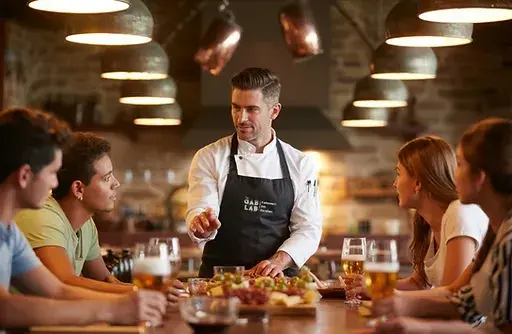
For those who want to develop these skills directly under experienced instruction, paella cooking classes in Barcelona offer hands-on guidance in authentic technique. Learning socarrat in a professional kitchen environment, with the immediate feedback of a skilled instructor, collapses the learning curve that otherwise takes years to navigate independently.
Frequently Asked Questions
What is socarrat?
Socarrat is the crispy, caramelized layer of rice that forms on the bottom of a paella pan during the final stage of cooking. It develops when the cooking liquid fully evaporates and the rice comes into direct contact with the hot pan surface. The result is a golden-brown, nutty-flavored crust that Valencian chefs and cooks consider the most prized element of authentic paella.
Is socarrat burnt rice?
No. Socarrat is the product of controlled caramelization and the Maillard reaction — intentional browning that delivers nutty, toasted, concentrated flavor. Burnt rice, by contrast, results from excessive heat or time, producing a bitter, acrid, black crust. Perfect socarrat is golden-brown and inviting; burnt rice is dark brown to black and unpleasant. The key distinction is heat control and timing.
Why is socarrat important in paella?
Socarrat is the technical and sensory benchmark of authentic paella. Its formation requires precise stock ratios, correct rice selection, no stirring, and expert heat management — meaning a paella that achieves socarrat has been executed correctly throughout. It also delivers the most concentrated, complex flavor in the dish, making it the most desirable element for experienced paella eaters.
How do you make socarrat?
To make socarrat, build a proper sofrito, add stock and rice at the correct ratio (3:1 for Bomba), never stir the rice, and cook uncovered at medium-high heat. When the liquid is nearly absorbed and the rice surface shows small craters, increase heat slightly for 60 to 90 seconds. Listen for a crackling sound and smell for a toasty, nutty aroma. Remove immediately when the aroma intensifies and rest before serving.
What rice is best for socarrat?
Bomba rice is the top choice for socarrat production. Its unique lateral expansion during cooking maintains a firm grain structure that crisps cleanly against the pan surface. Calasparra rice performs similarly well. Both varieties have high amylose starch content, which keeps grains separate and produces clean, even crust formation. For a full comparison, see the guide to the best rice for paella.
Does seafood paella have socarrat?
Yes. Socarrat forms in any properly made paella, including seafood paella. The technique is identical: the seafood stock provides the cooking liquid, and after absorption, the base rice crisps against the hot pan. Seafood paella socarrat carries a particularly intense flavor because seafood stocks are rich in glutamates, which concentrate further during caramelization.
Can you make socarrat on a stove?
Yes, socarrat forms on a domestic gas or induction stovetop. Gas burners provide more even, controllable heat distribution and are easier to manage for the final socarrat phase. Induction works well with cast iron or steel paella pans. The main challenge on a domestic stove is that standard burners are often smaller than the paella pan diameter; rotating the pan over the burner during the final stage distributes heat more evenly.
What does socarrat taste like?
Socarrat tastes intensely nutty, toasty, and savory — like the concentrated essence of the entire paella compressed into a crispy layer. Notes of caramel, toasted grain, and the specific stock flavors used in the dish (chicken, seafood, or rabbit and vegetable for Paella Valenciana) are all amplified. It delivers more flavor per bite than any other element of the dish.
Why do chefs value socarrat?
Chefs including José Andrés, Quique Dacosta, and José Garces value socarrat because its presence signals mastery of the entire paella cooking process. Achieving socarrat requires every other variable — rice selection, stock ratio, heat management, timing — to have been executed correctly. It is also the element that delivers the most complex, concentrated flavor, making it the most memorable part of the dish for experienced diners.
How do I know when socarrat is ready?
Socarrat announces itself through sound and smell. Listen for a distinct crackling sizzle from the bottom of the pan — the sound of rice in direct contact with the hot dry surface. Simultaneously, a warm, toasty, nutty aroma rises from the pan. When that aroma becomes clearly perceptible, remove the pan from heat immediately and allow it to rest 5 minutes. The socarrat firms slightly as the pan cools.
Can I get socarrat without a paella pan?
A traditional wide, shallow steel paella pan produces the best socarrat because its geometry maximizes evaporation surface area and allows even heat distribution. A wide, heavy-bottomed skillet or sauté pan produces acceptable results. Deep pots, non-stick pans, and covered cookware do not work — they trap moisture and prevent the drying-out phase that socarrat formation requires.
Does saffron affect socarrat?
Spanish saffron contributes color and flavor compounds to the stock that carry through into the socarrat layer. The crocin pigments in saffron, which give paella its characteristic golden hue, concentrate in the base layer during caramelization. The result is a socarrat with a slightly deeper color and a faint floral-earthy undertone that enhances the overall character of the crust.
Why should you not stir paella?
Stirring paella releases amylopectin from the surface of the rice grains and creates a thick, paste-like layer at the base of the pan. This paste cannot crisp into socarrat — it smothers the base layer, traps moisture, and prevents caramelization. Paella is fundamentally different from risotto precisely because it is never stirred: the rice absorbs liquid upward while the base dries and crisps downward.
What is the difference between socarrat and crusted rice?
Socarrat is specific to paella: it results from the interaction of Valencian short-grain rice varieties, a wide shallow pan, an uncovered cooking method, and high-quality stock. Other crusted rice dishes — such as Persian tahdig or Korean nurungji — share the same foundational principle of bottom-crust formation but differ in grain variety, fat content, cooking vessel, and flavor profile. Socarrat is the Valencian expression of a universal appreciation for caramelized rice.
Where can I learn authentic paella techniques?
The most effective way to learn socarrat and authentic traditional paella technique is through hands-on instruction. Paella cooking classes in Barcelona provide expert guidance, professional-grade equipment, authentic Spanish ingredients, and the immediate sensory feedback — hearing the crackling, smelling the toasting — that written guides alone cannot replicate.
Conclusion
Socarrat is not a byproduct, an accident, or a mistake. It is the goal — the final, defining moment of a well-made paella that tells anyone who tastes it that the cook understood exactly what they were doing from the first drop of olive oil to the last crackle of caramelizing rice.
Understanding what socarrat is answers a deeper question about what paella actually is: not just a rice dish but a living culinary tradition from Valencia, encoded with centuries of knowledge about fire, water, and grain. The techniques that produce socarrat — the undisturbed rice, the precise liquid ratios, the attentive heat management, the courage to leave the pan alone — represent the accumulated wisdom of Valencian rice culture.
Choosing the right rice, specifically Bomba or Calasparra, gives the socarrat its structural foundation. Controlling heat through the final 90 seconds determines whether that foundation transforms into a golden crust or a bitter disappointment. And knowing what to listen and smell for — the crackling, the warm toasty aroma — is the knowledge that closes the loop.
Whether you are cooking at home, exploring authentic Spanish paella for the first time, working through a seafood paella recipe, or refining your understanding of which rice works best — socarrat is your benchmark. Achieve it, and the rest of the dish will have taken care of itself.



Comments