
How Can Travel Companies Combine Paella Classes with Barcelona Sightseeing Tours?
- 7 hours ago
- 6 min read
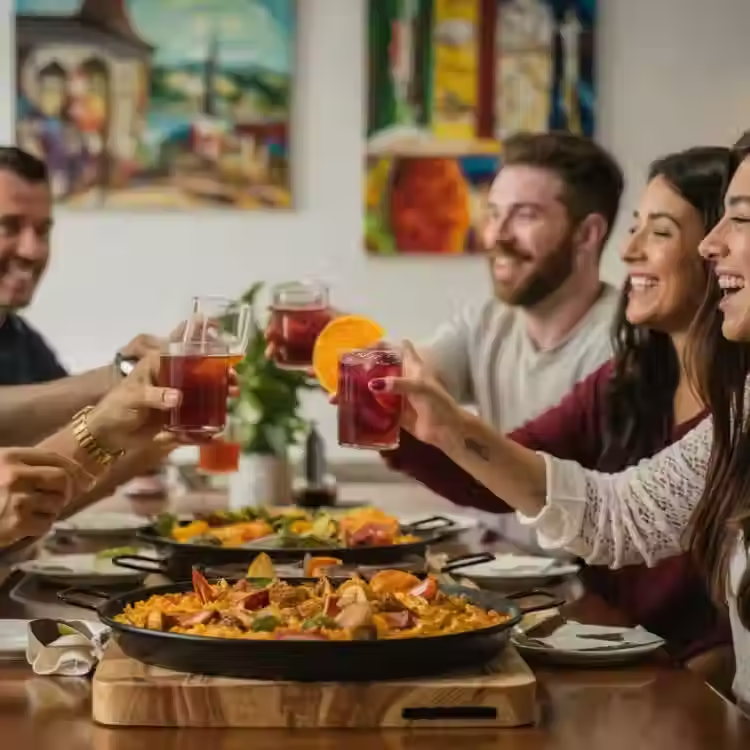
Barcelona is a city that begs to be explored through both its iconic landmarks and its rich culinary traditions. For travel companies, the challenge is creating itineraries that seamlessly integrate these experiences, offering clients a deeper, more authentic connection to Catalan culture.
The problem is that many tours treat sightseeing and dining as separate activities. Clients visit the Sagrada Familia in the morning, grab a generic meal, and miss the opportunity to understand the city through its food.
The solution is thoughtful integration. This guide provides practical strategies for combining paella classes with Barcelona sightseeing tours, creating cohesive, memorable experiences.
Why Combine Paella Classes with Sightseeing?
The reasoning is straightforward. Food is culture. A paella class is not just a cooking lesson; it is an introduction to Spanish history, agriculture, and social life. When you combine it with visits to Barcelona's landmarks, you are connecting two sides of the same story.
Deeper Engagement: Clients understand the city better when they experience both its history and its culinary traditions.
Natural Flow: A well-designed itinerary moves from one activity to the next without jarring transitions.
Increased Value: A combined package is more compelling than separate bookings.
Itinerary Ideas for Combining Paella and Sightseeing
Option 1: Market Visit, Paella Class, and Gothic Quarter Walk
This is a classic combination that works for almost any group.
Morning (9:00 AM – 11:30 AM): Start with a guided tour of La Boqueria market. It is not just a food market; it is a living museum of Catalan ingredients. The colors, the smells, and the energy are a sensory introduction to Barcelona.
Late Morning (11:30 AM – 2:30 PM): Walk a short distance to a private paella class. The transition is seamless because you have already engaged with the ingredients. The class becomes a natural extension of the market visit. This is where clients learn to prepare the iconic dish using the fresh ingredients they just explored.
Afternoon (3:00 PM – 5:00 PM): A guided walk through the Gothic Quarter. The narrow streets, the Roman ruins, and the medieval architecture provide a historical counterpoint to the culinary experience.
Option 2: Sagrada Familia and Paella Class
This is a more focused itinerary, ideal for clients who want to see Barcelona's most famous landmark.
Morning (9:00 AM – 11:30 AM): A private guided tour of the Sagrada Familia. The scale and detail of the basilica are overwhelming. It is the kind of experience that demands time and attention.
Late Morning (12:00 PM – 3:00 PM): Lunch and a paella class. The class can be scheduled at a nearby venue, allowing for a smooth transition from the basilica. Clients can discuss Gaudi's architectural influences while learning about the cultural significance of paella.
Afternoon (3:30 PM – 5:00 PM): Optional visit to the nearby Hospital de Sant Pau or the Sagrada Familia neighborhood. This provides a quieter ending to the day.
Option 3: Park Güell and Paella Class
Park Güell offers a different side of Gaudi—more playful and less imposing than the Sagrada Familia.
Morning (9:00 AM – 11:30 AM): A guided tour of Park Güell. The mosaics, the views, and the whimsical architecture create a light, engaging atmosphere.
Late Morning (12:00 PM – 3:00 PM): A paella class and lunch. The class can be held at a venue in the Gracia neighborhood, which is close to the park. The colorful mosaics of Park Güell can be thematically linked to the vibrant ingredients of a paella.
Afternoon (3:30 PM – 5:00 PM): Walk through the Gracia neighborhood. It has a distinct village atmosphere and is a good place to end the day.
Option 4: Montjuïc, Paella Class, and Flamenco
This is an evening-focused itinerary, ideal for groups looking for a memorable finale to their trip.
Late Afternoon (4:00 PM – 6:00 PM): Visit Montjuïc Castle or the MNAC for panoramic views of the city. The late light is spectacular.
Evening (6:30 PM – 9:30 PM): A private paella class followed by dinner. This is the main event of the evening. The class can be held at a venue with a view of the city lights.
Night (9:30 PM – 11:00 PM): A private flamenco show. The passion and intensity of the performance provides a dramatic conclusion to the day, tying together the culinary and cultural threads of the itinerary.
Practical Considerations
Timing: The ideal start time depends on the group and the season. In summer, an early start is essential to avoid the heat. In winter, a later start is fine. The paella class itself typically takes 3 to 4 hours. Sightseeing tours usually take 2 to 3 hours. A combined day will run from roughly 9:00 AM to 5:00 PM.
Breaks: Build in a short break between activities. The transition from a tour to a cooking class should not feel rushed. A coffee break or a short walk can provide a natural pause.
Dietary Needs: The paella class can be customized for dietary restrictions. This is a selling point for travel companies. Ensure the provider can accommodate vegetarian, vegan, gluten-free, and other needs.
Transport: Group transport between sites is essential. The distances are not huge, but the logistics of moving a group through Barcelona require planning. Consider hiring a private coach or arranging for taxis.
Language: Ensure the paella class instructor and the tour guide speak the client's language. English is standard, but other languages are often available.
Accessibility: Both paella classes and sightseeing tours can be adapted. The Gothic Quarter has cobblestones, which can be difficult for mobility-impaired clients. Choose venues and routes that are accessible.
How to Position This to Clients
The messaging should focus on the connection between the two experiences. Avoid selling it as two separate activities. It should be one cohesive experience.
Sample Descriptions:
"Explore Barcelona's architecture, then taste its culture."
"A day of art, history, and authentic Catalan cooking."
"See the sights, then learn the recipes behind them."
"Discover the flavors and stories of Barcelona in one immersive day."
Who Is This For?
First-Time Visitors: They want to see the landmarks. The paella class adds a cultural layer.
Foodies: They are in Barcelona for the food, but they still want to see the famous sites.
Corporate Groups: The combination of activity, learning, and dining works well for team building.
Family Groups: Cooking and sightseeing are both accessible to different ages.
Why Gastronomic Arts Barcelona Is the Right Partner
For travel companies, the choice of paella class provider is critical. The experience must be flexible, high-quality, and reliable.
Gastronomic Arts Barcelona offers private paella classes that can be customized to fit any itinerary. Their location is central, their chefs are professional, and their classes are designed for groups. They can also combine classes with market visits, flamenco, or wine tasting, creating a comprehensive cultural experience.
Key Advantages:
Private and Exclusive: All experiences are private for your group.
Exceptional Customization: Every detail can be tailored.
Professional Team: Experienced chefs, guides, and support staff.
Dietary Expertise: Accommodates all dietary needs.
Logistical Support: Handles all aspects of the experience.
Common Mistakes to Avoid
Overpacking the Itinerary: A 3-hour paella class plus a 2-hour tour plus a 1-hour market visit plus a 1-hour walk is too much. Clients will be exhausted. Prioritize quality over quantity.
Starting Too Late: An afternoon class after a morning tour is fine. But starting the tour at 11:00 AM and the class at 2:00 PM leaves no buffer for delays. Start early to maximize the day.
Ignoring the Weather: In summer, the heat is intense. Plan for morning sightseeing and an air-conditioned paella class in the afternoon.
Skipping the Market: The market visit is a natural lead-in to the paella class. Skipping it misses an opportunity to connect the two experiences.
Not Confirming Logistics: Confirm all details—timing, transport, dietary needs—with the provider well in advance.
The Bottom Line
Combining paella classes with Barcelona sightseeing tours is a logical and effective way to create memorable experiences. The key is to design itineraries that flow naturally, build in adequate time, and choose a reliable partner for the cooking class.
The clients who take these combined tours leave with more than just photographs. They leave with a deeper understanding of the city and its culture. They have cooked a paella, walked through the Gothic Quarter, and seen the Sagrada Familia—and they understand how all these pieces fit together.
Resources


Comments